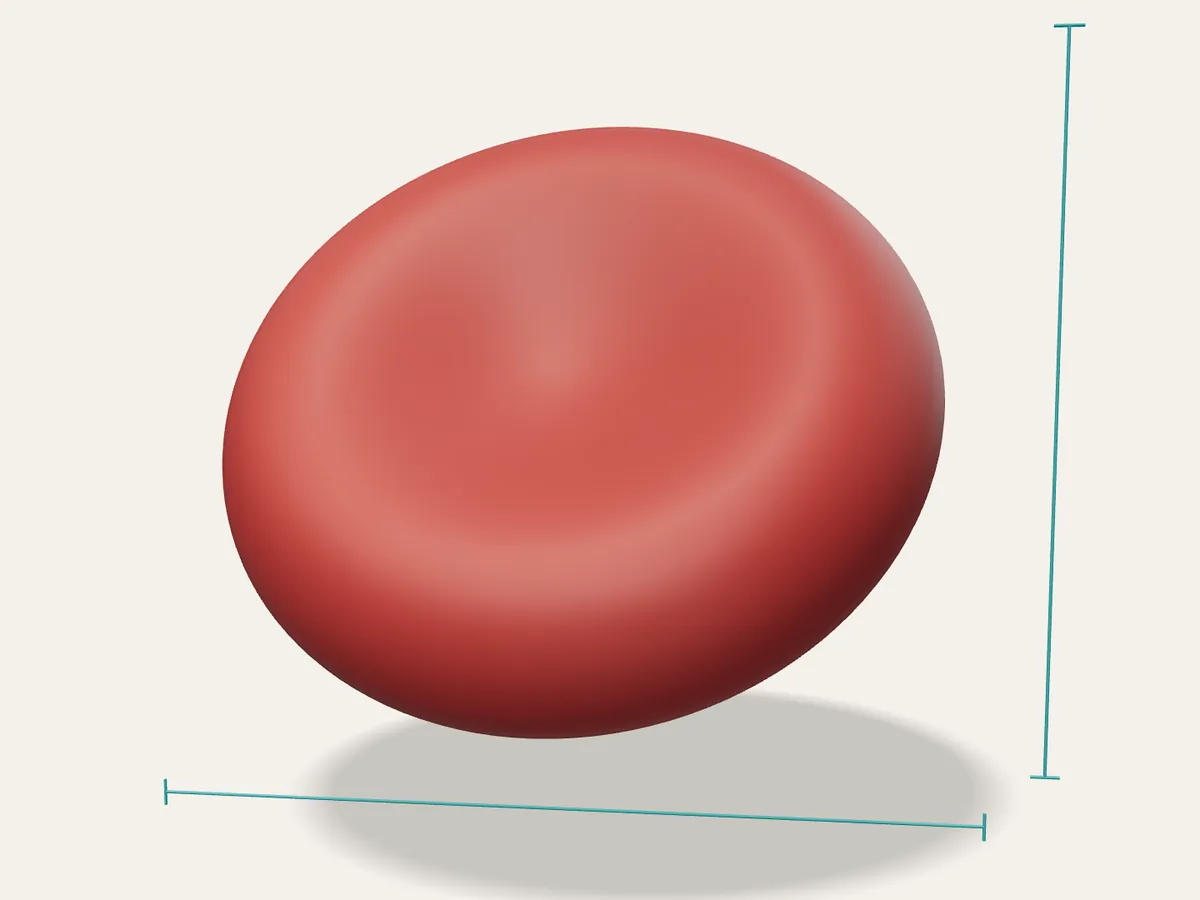
Average red-cell volume
Full Blood Count
MCV (mean cell volume) is the average size of your red blood cells. It is one of the most useful clues to why someone is anaemic.
Measured in your health assessment, with a doctor to explain your result. Book yours
Average red-cell volume
Red cells come out small when there isn't enough iron to fill them with haemoglobin, and large when they lack the vitamins needed to divide properly: B12 and folate. So small and large cells point in different directions, often before anaemia develops.
Smaller cells usually mean iron deficiency. Inherited traits such as thalassaemia trait also produce small cells, with normal iron stores, which is why MCV is read alongside ferritin.
Larger cells are often linked with regular alcohol intake, low B12 or folate, an underactive thyroid, liver disease or some medicines, such as methotrexate. Pregnancy and a surge of young red cells can raise it too.
Correcting iron, B12 or folate, cutting down on alcohol and treating thyroid or liver conditions bring MCV back towards normal over three or four months, the time it takes to replace the red cells you have now.
NoteGeneral educational illustration. Colours, sizes and movement are simplified. This is not a scan or a simulation of your body. General information, not personal medical advice: a doctor reads your own results with your history.
Measured in your health assessment and explained by the doctor who reviews your results.