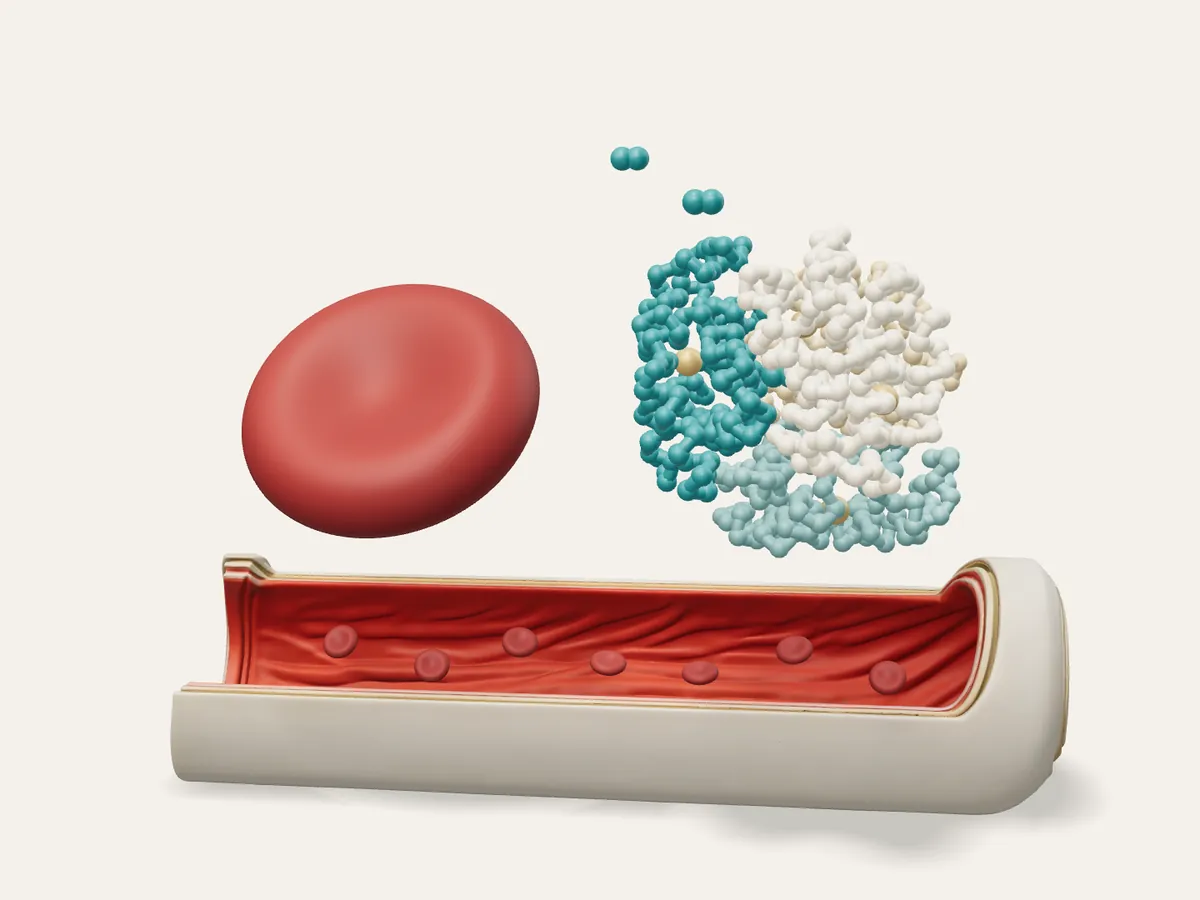
Oxygen carried by haemoglobin
Full Blood Count
Haemoglobin is the iron-containing protein that fills your red blood cells and carries oxygen from your lungs to every tissue. It is what makes blood red.
Measured in your health assessment, with a doctor to explain your result. Book yours
Oxygen carried by haemoglobin
Each molecule carries four oxygen molecules and lets them go more readily in tissues that are warm and working hard, such as exercising muscle. It is the main measurement for diagnosing anaemia: typical adult levels are about 130 to 170 g/L in men and 120 to 150 g/L in women.
Low haemoglobin is anaemia, which can cause tiredness, breathlessness, headaches and pale skin. Iron deficiency is the commonest cause worldwide; others include blood loss, low B12 or folate, kidney disease and chronic inflammation. The size of the red cells (MCV) helps point to which.
A raised level is usually relative, from dehydration, or a response to low oxygen, as with smoking, altitude, sleep apnoea or lung disease. Testosterone treatment raises it too. Rarely it reflects a bone-marrow condition that needs specialist care.
Treatment targets the cause: replacing iron, B12 or folate, treating heavy periods or bleeding from the gut, or managing an underlying condition. Red meat, pulses and dark leafy greens help maintain iron, and vitamin C with a meal improves how much iron you absorb from plants.
NoteGeneral educational illustration. Colours, sizes and movement are simplified. This is not a scan or a simulation of your body. General information, not personal medical advice: a doctor reads your own results with your history.
Measured in your health assessment and explained by the doctor who reviews your results.