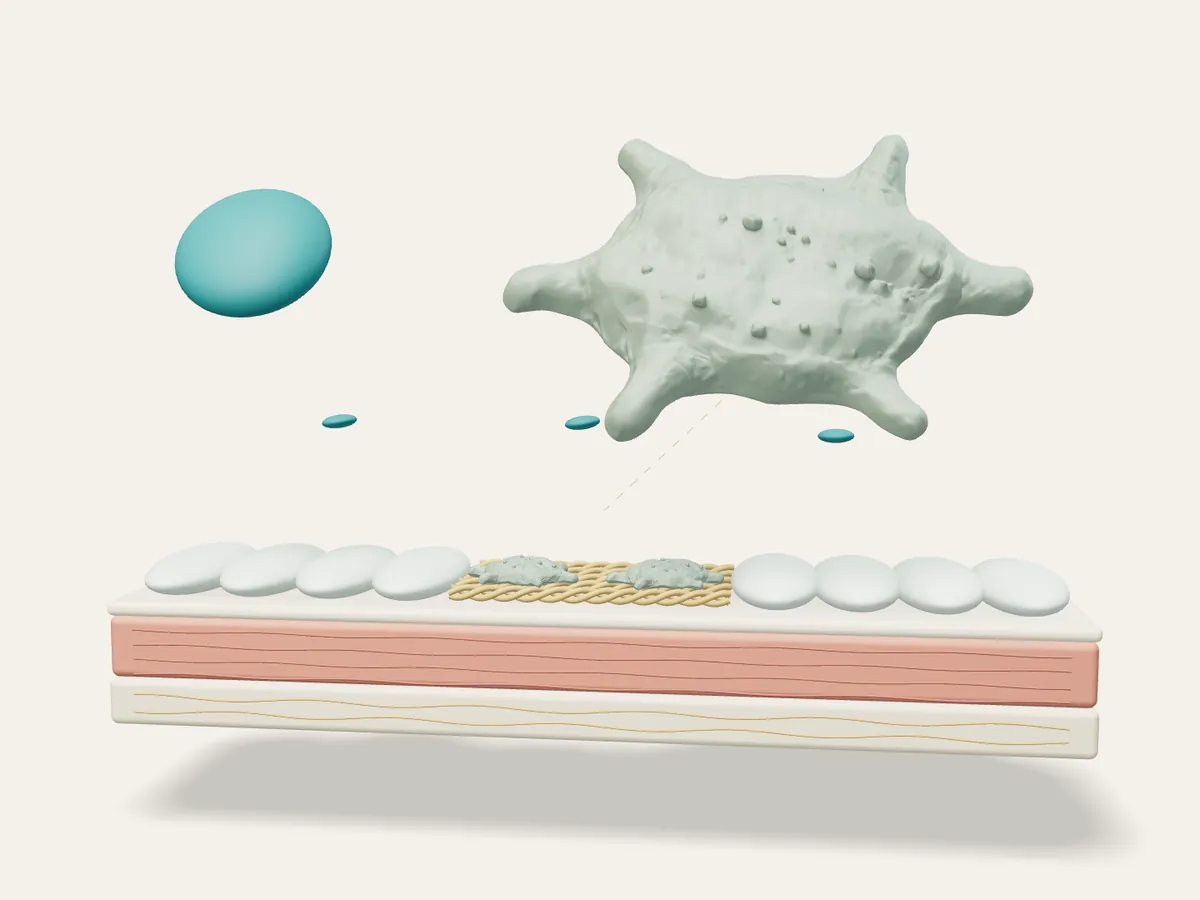
Platelets attach at a local vessel injury
Full Blood Count
Platelets are tiny cell fragments that plug leaks. Within seconds of a blood vessel being damaged they stick to the wall, clump together and start the clotting process.
Measured in your health assessment, with a doctor to explain your result. Book yours
Platelets attach at a local vessel injury
They are budded off by giant cells in the bone marrow called megakaryocytes and live for about a week to ten days. With too few you bruise or bleed easily; with too many the risk of clotting can rise.
Lower counts can follow viral infections, heavy drinking, some medicines, liver disease with an enlarged spleen, or immune conditions in which the body removes its own platelets. Mild reductions are common and often harmless; very low counts cause easy bruising and bleeding.
Most raised counts are reactive, a response to infection, inflammation, iron deficiency, recent surgery or bleeding, and they settle when the trigger does. A persistently high count with no cause can come from a bone-marrow condition and is assessed by a haematologist.
Treatment is aimed at the cause: treating iron deficiency or infection, cutting down on alcohol or reviewing medicines. Mild changes are usually rechecked rather than treated; marked or persistent ones are assessed by a specialist.
NoteGeneral educational illustration. Colours, sizes and movement are simplified. This is not a scan or a simulation of your body. General information, not personal medical advice: a doctor reads your own results with your history.
Measured in your health assessment and explained by the doctor who reviews your results.