Red-cell share of blood volume
Full Blood Count
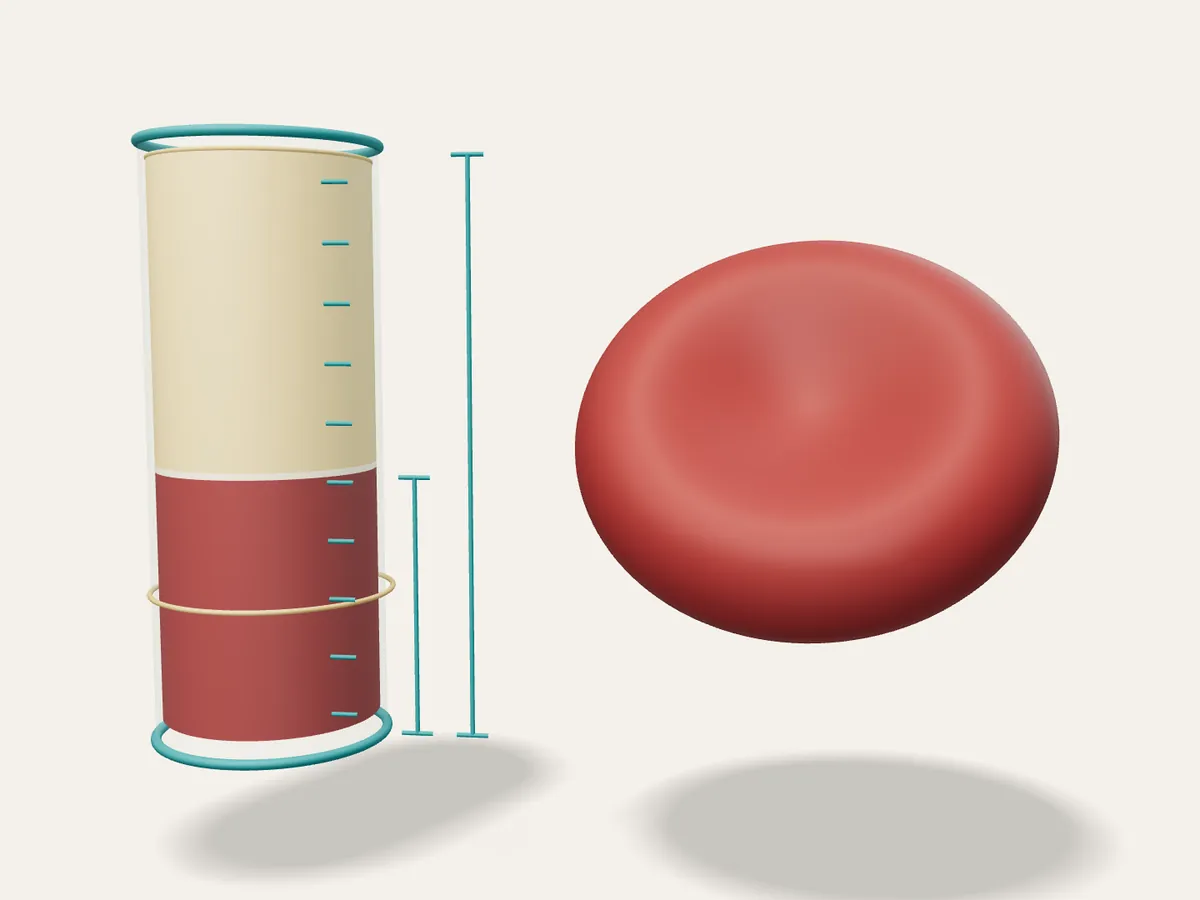
Haematocrit is the share of your blood's volume taken up by red cells: usually around 40 to 50% in men and 36 to 46% in women. Most of the rest is plasma.
Measured in your health assessment, with a doctor to explain your result. Book yours
Red-cell share of blood volume
Spin a tube of blood and the red cells settle at the bottom; their height is the haematocrit. It rises and falls with both the number of red cells and the amount of fluid in your bloodstream, so it is a useful check on hydration as well as anaemia.
A low haematocrit usually means anaemia or, in pregnancy, the normal dilution of the blood. Recent bleeding or a lot of intravenous fluid can lower it too.
A high haematocrit most often comes from dehydration, smoking, altitude, low-oxygen conditions or testosterone treatment. Very high values make blood thicker, which raises the risk of clots, so a persistent rise is looked into.
Drinking enough and stopping smoking deal with the common causes of a high value, and people on testosterone may need their treatment reviewed by the prescriber. A low value is managed by finding and treating the cause of anaemia.
NoteGeneral educational illustration. Colours, sizes and movement are simplified. This is not a scan or a simulation of your body. General information, not personal medical advice: a doctor reads your own results with your history.
Measured in your health assessment and explained by the doctor who reviews your results.