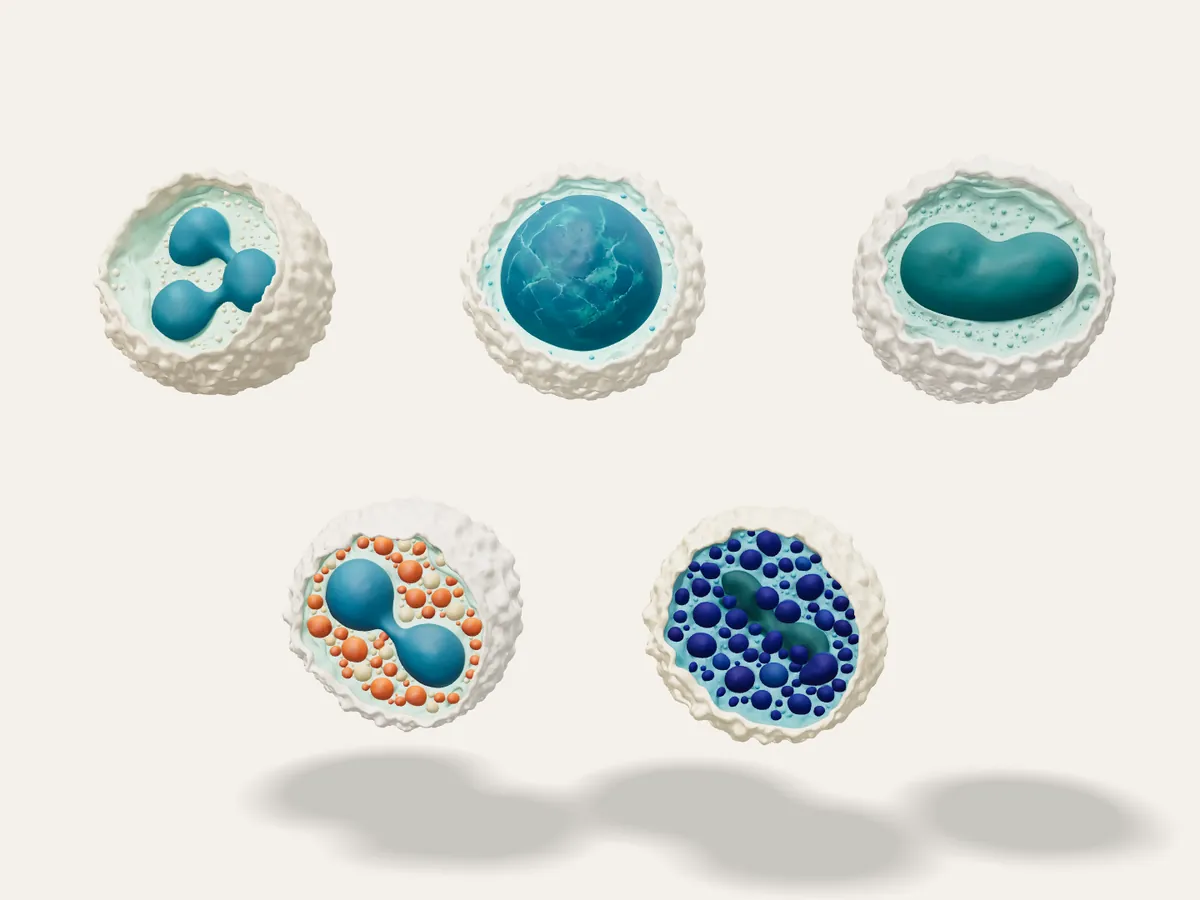
Types counted as white blood cells
Full Blood Count
White blood cells are your immune system's mobile force. The total count adds up the five main types that patrol your blood: neutrophils, lymphocytes, monocytes, eosinophils and basophils.
Measured in your health assessment, with a doctor to explain your result. Book yours
Types counted as white blood cells
Most white cells live in your tissues and lymph nodes; the bloodstream is simply their highway. The total rises and falls quickly with infection, stress and medicines, so the breakdown into types usually tells us more than the total.
A low count can follow a viral illness, some medicines (including certain antibiotics, anti-thyroid drugs and chemotherapy), autoimmune conditions, or low B12 or folate. Some people of African, Caribbean or Middle Eastern ancestry naturally run a lower count, with no added risk of infection.
A raised count usually means your body is fighting an infection or inflammation. Smoking, pregnancy, intense exercise, stress and steroid medicines raise it too. A very high or persistently unexplained count is investigated, as occasionally it comes from a blood cancer.
Most changes settle once an infection passes, so a mildly abnormal count is often repeated. Stopping smoking lowers a chronically raised count; persistent or marked changes are investigated, and medicines are reviewed if they may be responsible.
NoteGeneral educational illustration. Colours, sizes and movement are simplified. This is not a scan or a simulation of your body. General information, not personal medical advice: a doctor reads your own results with your history.
Measured in your health assessment and explained by the doctor who reviews your results.