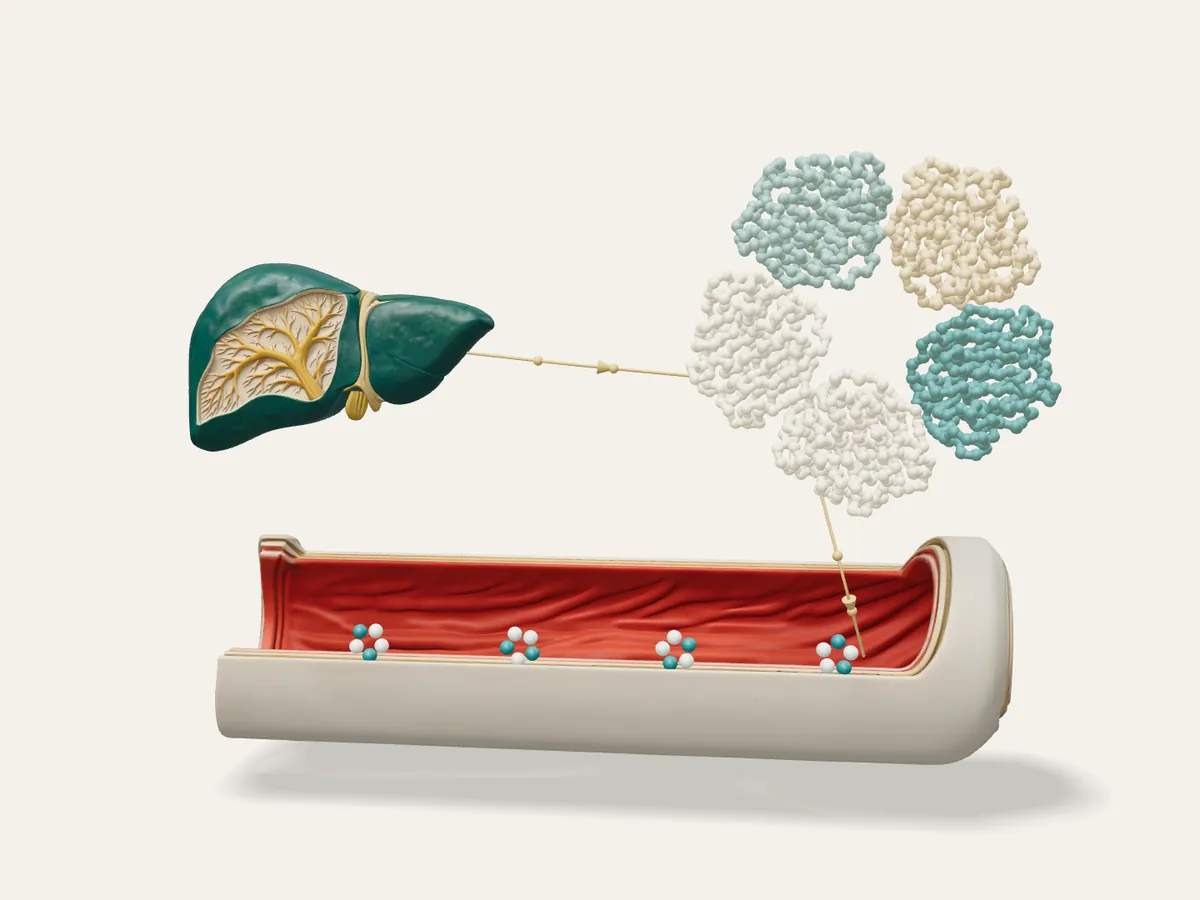
The liver produces CRP in response to inflammation
Infection & Inflammation
CRP (C-reactive protein) is made by the liver within hours of inflammation or infection anywhere in the body: a general alarm signal.
Measured in your health assessment, with a doctor to explain your result. Book yours
The liver produces CRP in response to inflammation
Large rises point to infection or active inflammation. Smaller, persistent rises, measured with a high-sensitivity test, reflect low-grade inflammation in the blood vessels, which is linked with a higher risk of heart disease.
A low CRP is what we hope to see: below 1 mg/L goes with the lowest cardiovascular risk.
A very high CRP usually means an infection, such as a chest or urine infection, or a flare of an inflammatory condition. Mildly raised levels, around 3 to 10 mg/L, are common with excess weight, smoking, inactivity, poor sleep, gum disease and autoimmune conditions.
Regular exercise, weight loss, not smoking, a Mediterranean-style diet, good sleep and looking after your teeth and gums all lower chronic inflammation. A CRP that was raised during an illness is rechecked once you have recovered.
NoteGeneral educational illustration. Colours, sizes and movement are simplified. This is not a scan or a simulation of your body. General information, not personal medical advice: a doctor reads your own results with your history.
Measured in your health assessment and explained by the doctor who reviews your results.