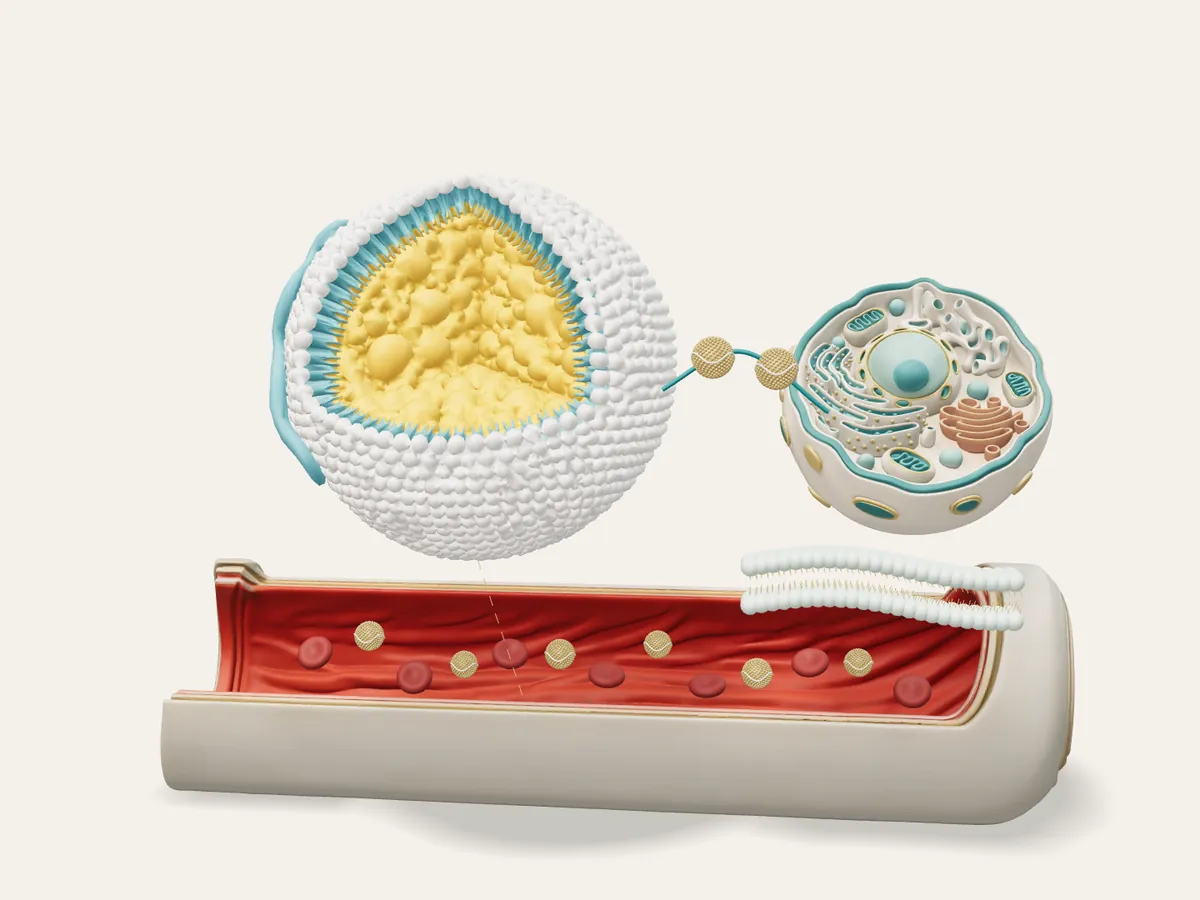
LDL carries cholesterol
Heart Health
LDL is the main delivery vehicle for cholesterol, carrying it from the liver out to the cells of your body.
Measured in your health assessment, with a doctor to explain your result. Book yours
LDL carries cholesterol
When there is more LDL than the body needs, particles slip into artery walls, become trapped and oxidised, and start the build-up of fatty plaque (atherosclerosis). Lifetime exposure is what counts: the lower your LDL and the longer it stays low, the lower your risk of heart attack and stroke.
A low LDL is generally good news and is the aim of treatment. People born with naturally very low LDL have much lower rates of heart disease throughout life.
A high LDL is driven by genes, a diet high in saturated fat, excess weight, an underactive thyroid, some kidney conditions and the menopause. Very high levels from early life suggest familial hypercholesterolaemia, which runs in families and responds well to treatment.
Swapping saturated for unsaturated fats, eating around 30 g of fibre a day, adding plant sterols and staying active can lower LDL by 10 to 20%. Statins and other medicines lower it by 30 to 60% or more, and are offered according to your overall cardiovascular risk.
NoteGeneral educational illustration. Colours, sizes and movement are simplified. This is not a scan or a simulation of your body. General information, not personal medical advice: a doctor reads your own results with your history.
Measured in your health assessment and explained by the doctor who reviews your results.