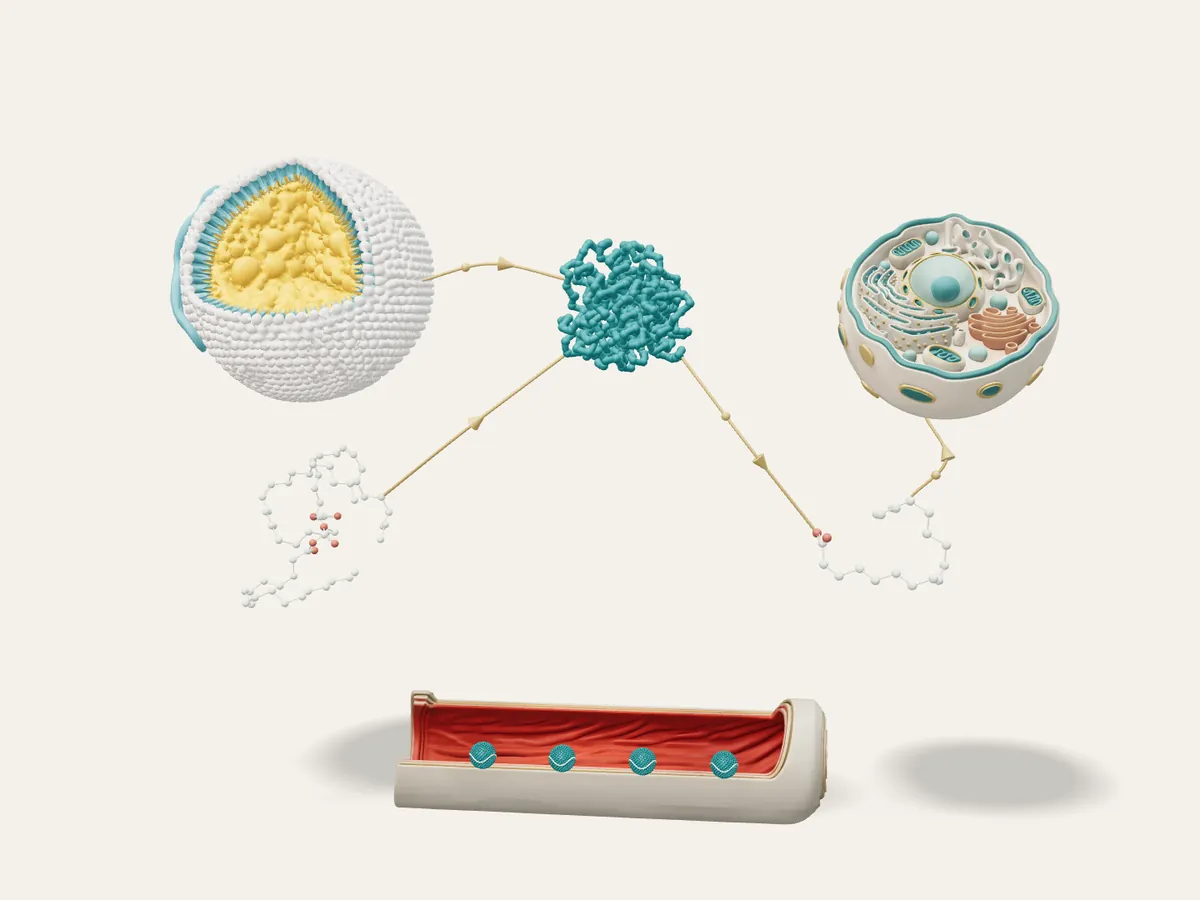
Triglyceride processing releases fatty acids
Heart Health
Triglycerides are the main form of fat in your diet and in your body: energy stored for later. In the blood they travel in particles made by the gut after meals and by the liver between meals.
Measured in your health assessment, with a doctor to explain your result. Book yours
Triglyceride processing releases fatty acids
The liver turns surplus calories, especially from sugar, refined carbohydrates and alcohol, into triglycerides. High levels are a hallmark of insulin resistance and usually come with low HDL and smaller, denser LDL particles, a combination that raises cardiovascular risk.
Low triglycerides are usually a sign of good metabolic health, common in active people who eat few refined carbohydrates.
Raised triglycerides are linked with weight around the middle, insulin resistance and type 2 diabetes, alcohol, a high-sugar diet, an underactive thyroid, some medicines and genes. A recent meal raises them too. Very high levels, above about 10 mmol/L, can inflame the pancreas.
Triglycerides respond quickly to change. Cutting sugar, refined carbohydrates and alcohol, losing excess weight, exercising regularly and eating oily fish can lower them substantially within weeks. Very high levels are treated by doctors with specific medicines.
NoteGeneral educational illustration. Colours, sizes and movement are simplified. This is not a scan or a simulation of your body. General information, not personal medical advice: a doctor reads your own results with your history.
Measured in your health assessment and explained by the doctor who reviews your results.