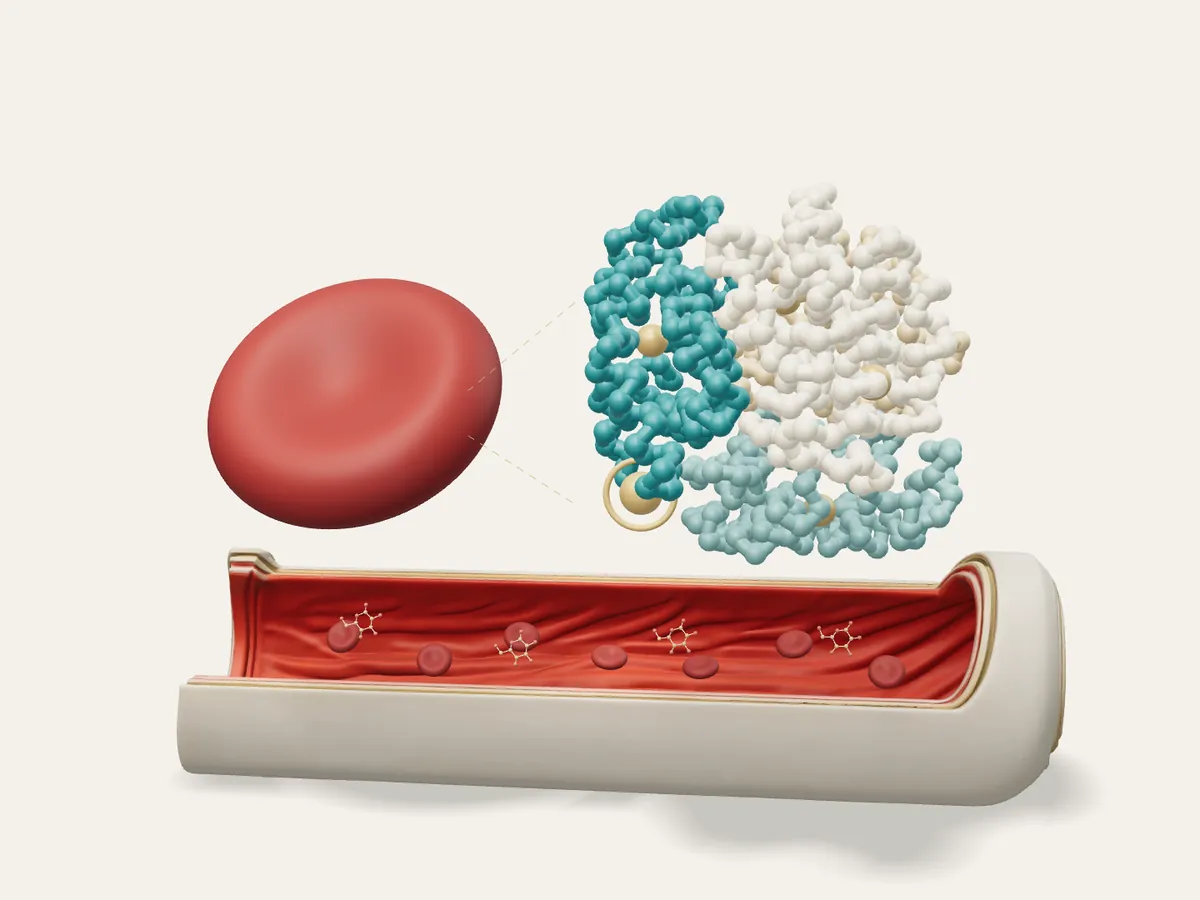
Glucose attached to haemoglobin
Diabetes Health
HbA1c measures how much glucose has stuck to the haemoglobin in your red blood cells: a built-in record of your average blood sugar over the last two to three months.
Measured in your health assessment, with a doctor to explain your result. Book yours
Glucose attached to haemoglobin
Glucose attaches to haemoglobin slowly and permanently, so the more sugar in your blood, the more glycated haemoglobin builds up during each red cell's 120-day life. It needs no fasting and is the main test used to diagnose and monitor type 2 diabetes.
A low HbA1c is usually healthy. Unexpectedly low results can happen when red cells are short-lived, for example after blood loss, with some haemoglobin variants or in pregnancy.
A result of 42 to 47 mmol/mol means a raised risk of type 2 diabetes, often called prediabetes, and 48 mmol/mol or above, once confirmed, means diabetes. Iron deficiency can push HbA1c up a little without any change in glucose.
Prediabetes is very reversible. Losing around 5 to 10% of body weight, being active most days and cutting refined carbohydrates can bring HbA1c back down and substantially lower the chance of developing diabetes; the NHS Diabetes Prevention Programme is built on exactly this.
NoteGeneral educational illustration. Colours, sizes and movement are simplified. This is not a scan or a simulation of your body. General information, not personal medical advice: a doctor reads your own results with your history.
Measured in your health assessment and explained by the doctor who reviews your results.