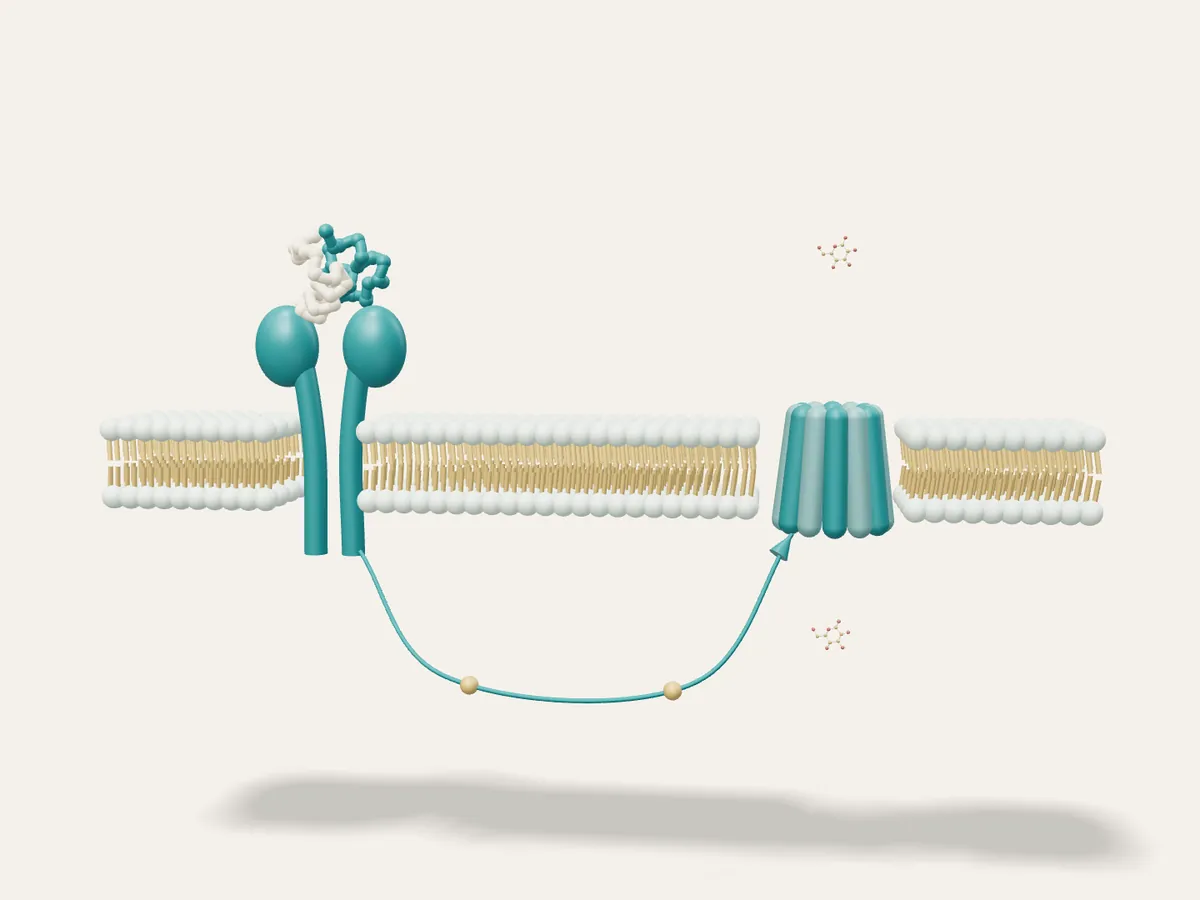
Insulin signals glucose uptake
Diabetes Health
Insulin is the hormone that opens the doors. Made by the pancreas, it tells muscle, liver and fat cells to take in glucose from the blood and store energy.
Measured in your health assessment, with a doctor to explain your result. Book yours
Insulin signals glucose uptake
When cells stop responding well, called insulin resistance, the pancreas compensates by making more. So a high fasting insulin can reveal metabolic strain years before glucose or HbA1c start to rise.
A low fasting insulin with a normal glucose usually means you are sensitive to insulin, which is good. A low insulin with a high glucose suggests the pancreas isn't making enough, as in type 1 diabetes or long-standing type 2 diabetes.
A raised fasting insulin usually signals insulin resistance, linked with weight around the middle, inactivity, fatty liver, polycystic ovary syndrome and a higher risk of type 2 diabetes. A recent meal raises it too.
Insulin sensitivity responds quickly to exercise, both aerobic and strength training, as well as to weight loss, better sleep and fewer refined carbohydrates. A single bout of exercise improves it for a day or two.
NoteGeneral educational illustration. Colours, sizes and movement are simplified. This is not a scan or a simulation of your body. General information, not personal medical advice: a doctor reads your own results with your history.
Measured in your health assessment and explained by the doctor who reviews your results.