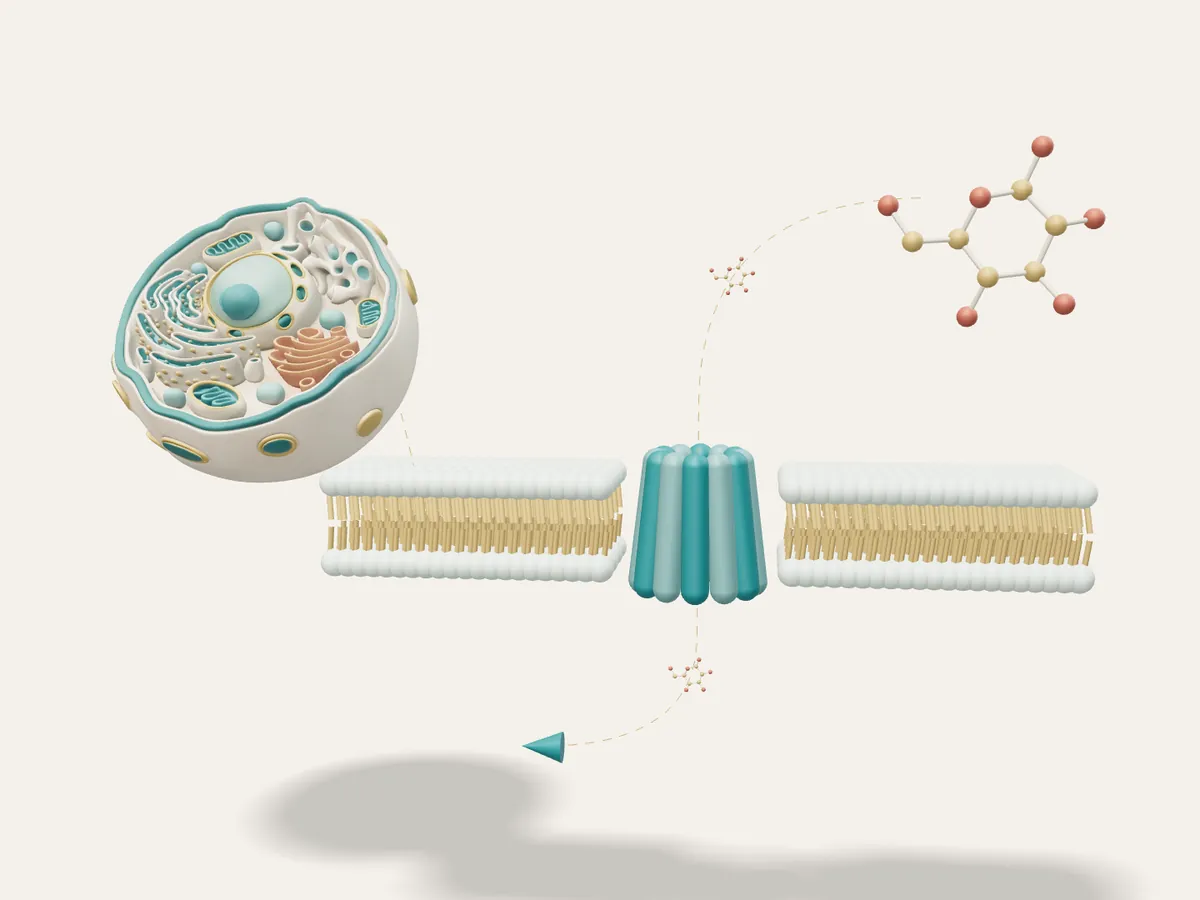
Glucose enters cells through a transporter
Diabetes Health
Glucose is your body's main fuel: the sugar your blood carries to every cell, and your brain's preferred source of energy.
Measured in your health assessment, with a doctor to explain your result. Book yours
Glucose enters cells through a transporter
Insulin keeps it within a narrow range by moving glucose into muscle, liver and fat cells after meals. A fasting glucose shows how well that system copes overnight, and it is read with HbA1c, which shows the longer-term average.
Low glucose, below about 4 mmol/L, is uncommon in people who don't take diabetes medicines. It can follow a long fast, heavy exercise or alcohol, and rarely points to a hormonal condition.
A fasting level of 6.1 to 6.9 mmol/L suggests impaired fasting glucose, a form of prediabetes, and 7.0 mmol/L or above, once confirmed, suggests diabetes. Stress, illness, steroid medicines and a sample taken after eating can all raise a single reading.
Regular activity (working muscles soak up glucose), losing excess weight, fewer refined carbohydrates and sugary drinks, more fibre and good sleep all improve glucose control. In diabetes, medicines are added when lifestyle changes aren't enough.
NoteGeneral educational illustration. Colours, sizes and movement are simplified. This is not a scan or a simulation of your body. General information, not personal medical advice: a doctor reads your own results with your history.
Measured in your health assessment and explained by the doctor who reviews your results.