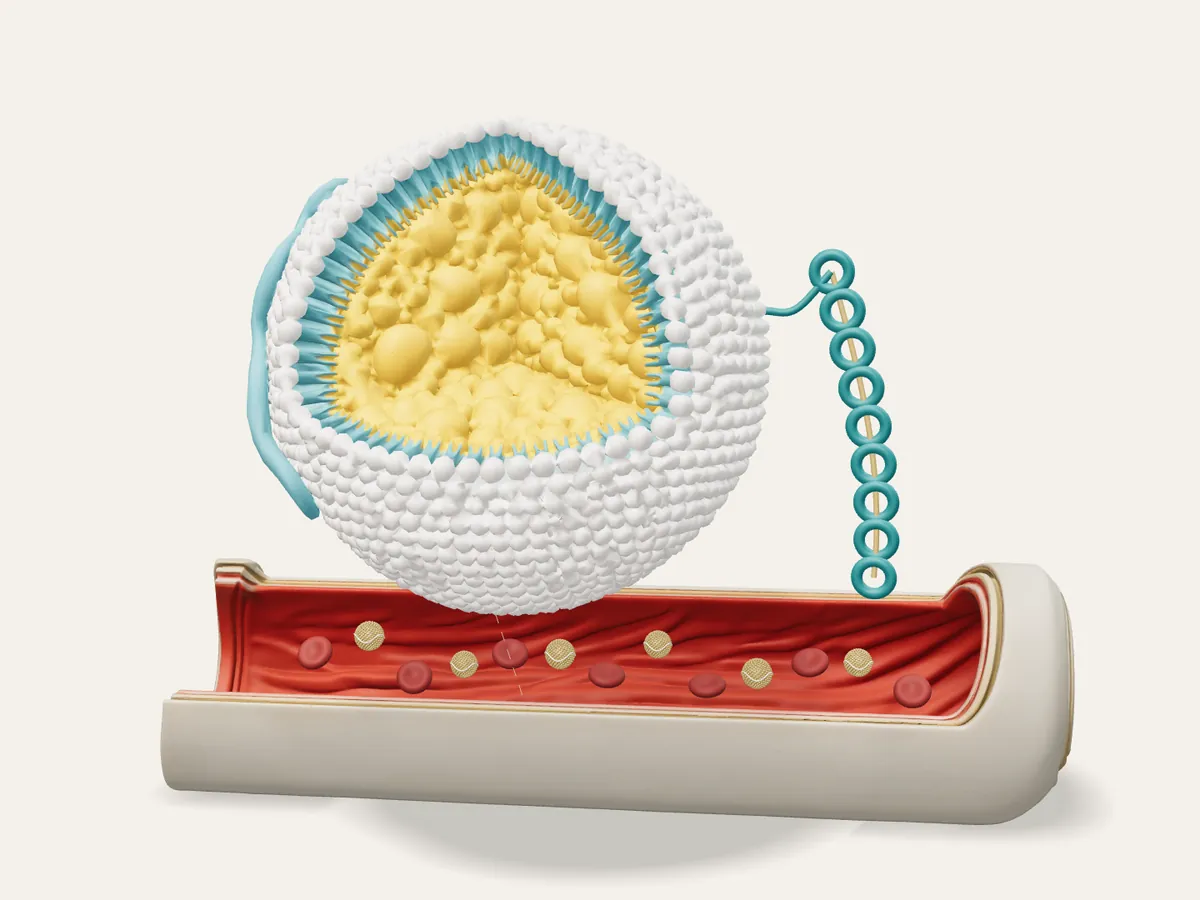
What makes Lp(a) different
Heart Health
Lipoprotein(a), or Lp(a), is an LDL-like particle with an extra protein tail. Your level is mostly inherited and stays much the same throughout life.
Measured in your health assessment, with a doctor to explain your result. Book yours
What makes Lp(a) different
It carries cholesterol into artery walls like LDL, but it also promotes inflammation and clotting. About one in five people have a raised level and most don't know it, which is why guidelines recommend measuring it at least once in adult life.
A low Lp(a) is common and means this inherited risk factor isn't adding to your risk.
A raised Lp(a), above about 90 nmol/L, increases the risk of heart attack, stroke and narrowing of the aortic valve, even when LDL is normal. It matters most when heart disease runs in your family.
Diet and exercise barely change Lp(a), but a high level is still very useful to know: it is a reason to manage everything else more tightly, especially LDL and blood pressure. Medicines that lower Lp(a) directly are being tested in large trials, and close relatives may be offered testing.
NoteGeneral educational illustration. Colours, sizes and movement are simplified. This is not a scan or a simulation of your body. General information, not personal medical advice: a doctor reads your own results with your history.
Measured in your health assessment and explained by the doctor who reviews your results.