HDL return transport
Heart Health
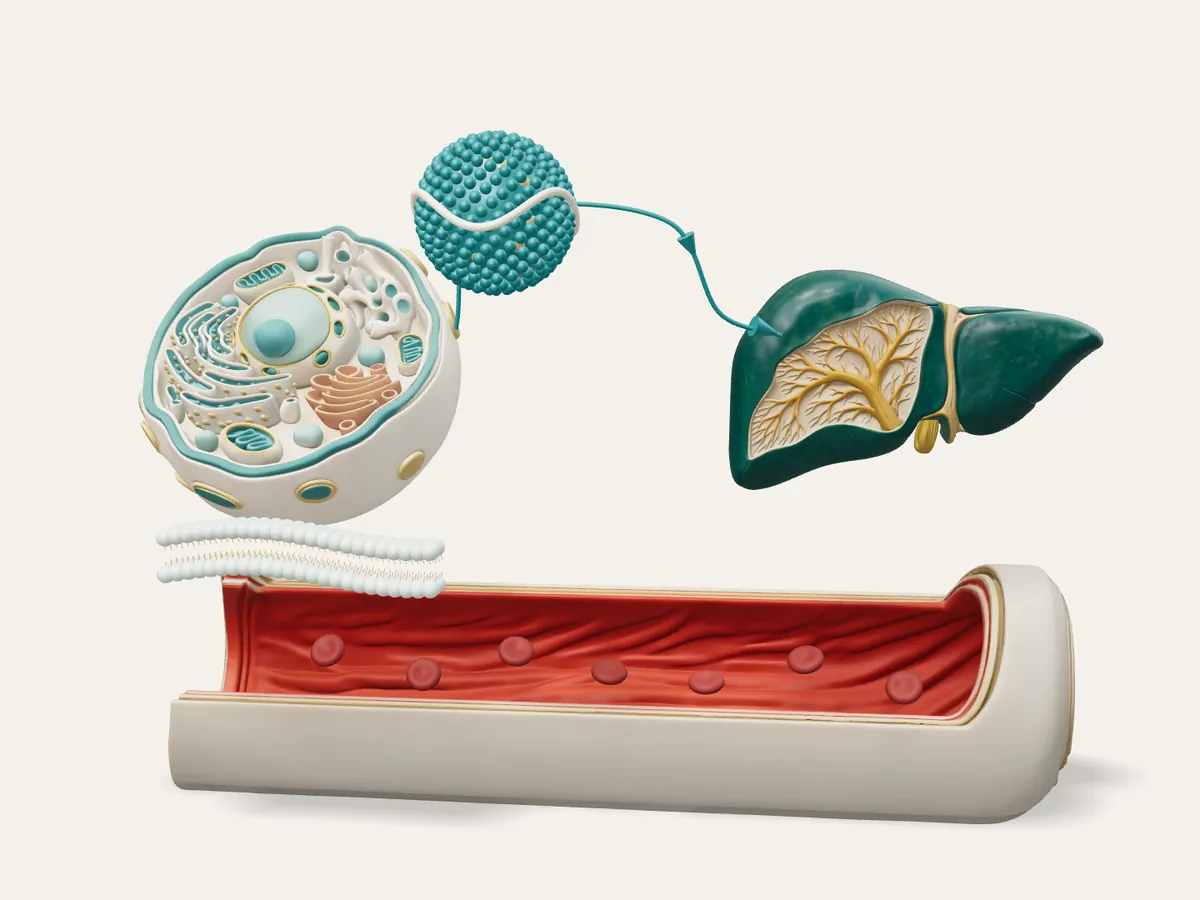
HDL is the cholesterol your body is sending home. HDL particles collect spare cholesterol from tissues and artery walls and carry it back to the liver, which reuses it or clears it into bile.
Measured in your health assessment, with a doctor to explain your result. Book yours
HDL return transport
This return journey is why HDL earned the nickname ‘good cholesterol’. Across large populations, people with higher HDL have fewer heart attacks, but medicines that raised HDL did not reduce heart disease, so doctors now see HDL as a sign of overall metabolic health rather than a target in itself.
Low HDL, below about 1.0 mmol/L in men or 1.2 mmol/L in women, often travels with high triglycerides, weight around the middle, insulin resistance and smoking. It adds to your risk in cardiovascular risk calculators such as QRISK.
Higher HDL usually reflects regular exercise, a healthy weight, not smoking and, often, your genes. Very high levels, above about 2.3 mmol/L, bring no extra protection and can occasionally come from heavy drinking or rare inherited differences.
Aerobic exercise, losing excess weight, stopping smoking and swapping refined carbohydrates for unsaturated fats all nudge HDL upwards. No medicine is used to raise HDL on its own; instead doctors look at your whole risk picture, including LDL, blood pressure and blood sugar.
NoteGeneral educational illustration. Colours, sizes and movement are simplified. This is not a scan or a simulation of your body. General information, not personal medical advice: a doctor reads your own results with your history.
Measured in your health assessment and explained by the doctor who reviews your results.