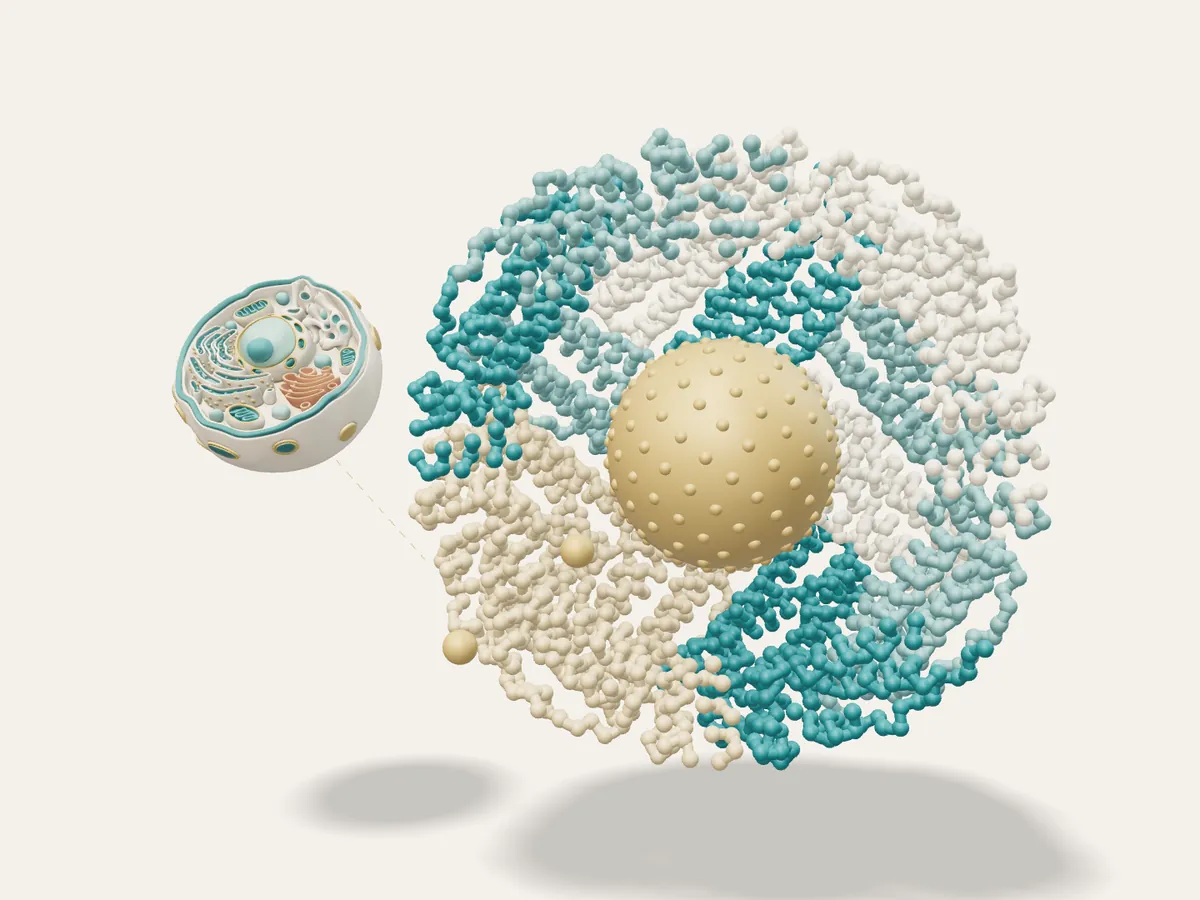
Ferritin stores iron
Iron Status
Ferritin is your body's iron store: a hollow protein shell that can lock away up to 4,500 iron atoms, mainly in the liver, spleen and bone marrow.
Measured in your health assessment, with a doctor to explain your result. Book yours
Ferritin stores iron
A small amount leaks into the blood in proportion to your stores, so blood ferritin is the best single test of whether you are running low on iron, often long before haemoglobin falls. It also rises with inflammation, which is why it is read with CRP.
Low ferritin means your iron stores are depleted. Below about 30 µg/L iron deficiency is likely, even if you are not yet anaemic, and it can cause tiredness, hair shedding and restless legs. Common causes are heavy periods, pregnancy, plant-based diets, frequent blood donation and gut conditions that cause bleeding or poor absorption.
High ferritin is more often due to inflammation, infection, alcohol, fatty liver or metabolic syndrome than to too much iron. When transferrin saturation is also high, iron overload such as genetic haemochromatosis, which is common in people of Northern European descent, needs to be ruled out.
Stores are rebuilt with iron-rich foods and, when needed, supplements, and by finding out why they ran low. For a high ferritin, cutting down on alcohol and losing excess weight often help; genetic iron overload is treated by regularly removing blood, called venesection.
NoteGeneral educational illustration. Colours, sizes and movement are simplified. This is not a scan or a simulation of your body. General information, not personal medical advice: a doctor reads your own results with your history.
Measured in your health assessment and explained by the doctor who reviews your results.