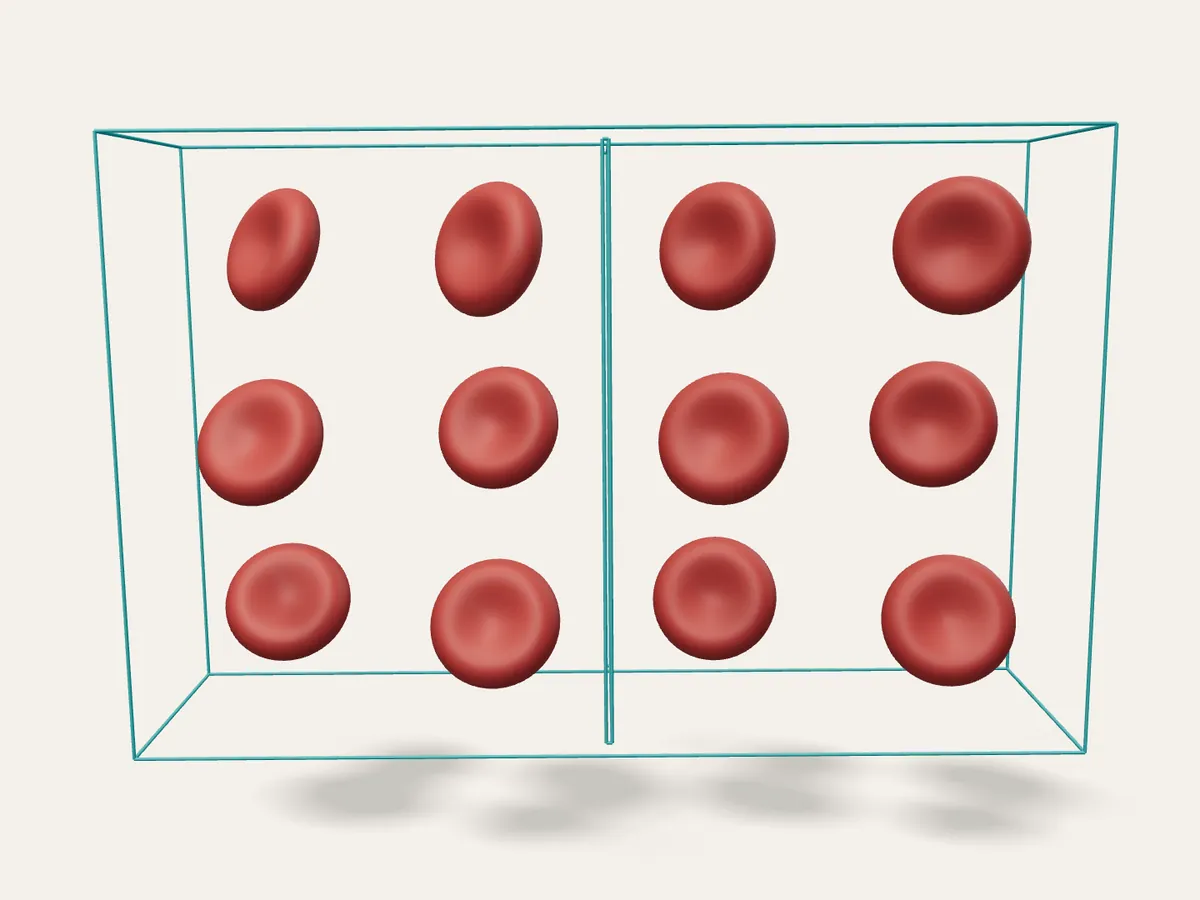
Counting red cells in blood
Full Blood Count
Red blood cells are your oxygen couriers. A healthy adult carries around 25 trillion of them, which makes them the most numerous cells in the body.
Measured in your health assessment, with a doctor to explain your result. Book yours
Counting red cells in blood
They are made in the bone marrow and live for about 120 days, folding to squeeze through capillaries narrower than themselves before the spleen recycles them. The count shows how many are circulating, and it is read with haemoglobin and the red-cell indices (MCV, MCH) to see whether your body is making enough of them, and making them well.
A lower count usually travels with anaemia. The commonest causes are iron deficiency, blood loss (including heavy periods), low vitamin B12 or folate, kidney disease and long-term inflammation. Pregnancy lowers it naturally as the volume of plasma expands.
A higher count can come from dehydration (less fluid makes the cells more concentrated), smoking, living at altitude, or conditions that lower oxygen such as sleep apnoea or lung disease. Rarely, the bone marrow overproduces red cells on its own, a condition called polycythaemia vera.
The answer depends on the cause: iron, B12 or folate are replaced when they are low, and the source of any blood loss is found and treated. For a high count, drinking enough and stopping smoking come first; a persistent rise is investigated and, when needed, managed by a haematologist.
NoteGeneral educational illustration. Colours, sizes and movement are simplified. This is not a scan or a simulation of your body. General information, not personal medical advice: a doctor reads your own results with your history.
Measured in your health assessment and explained by the doctor who reviews your results.