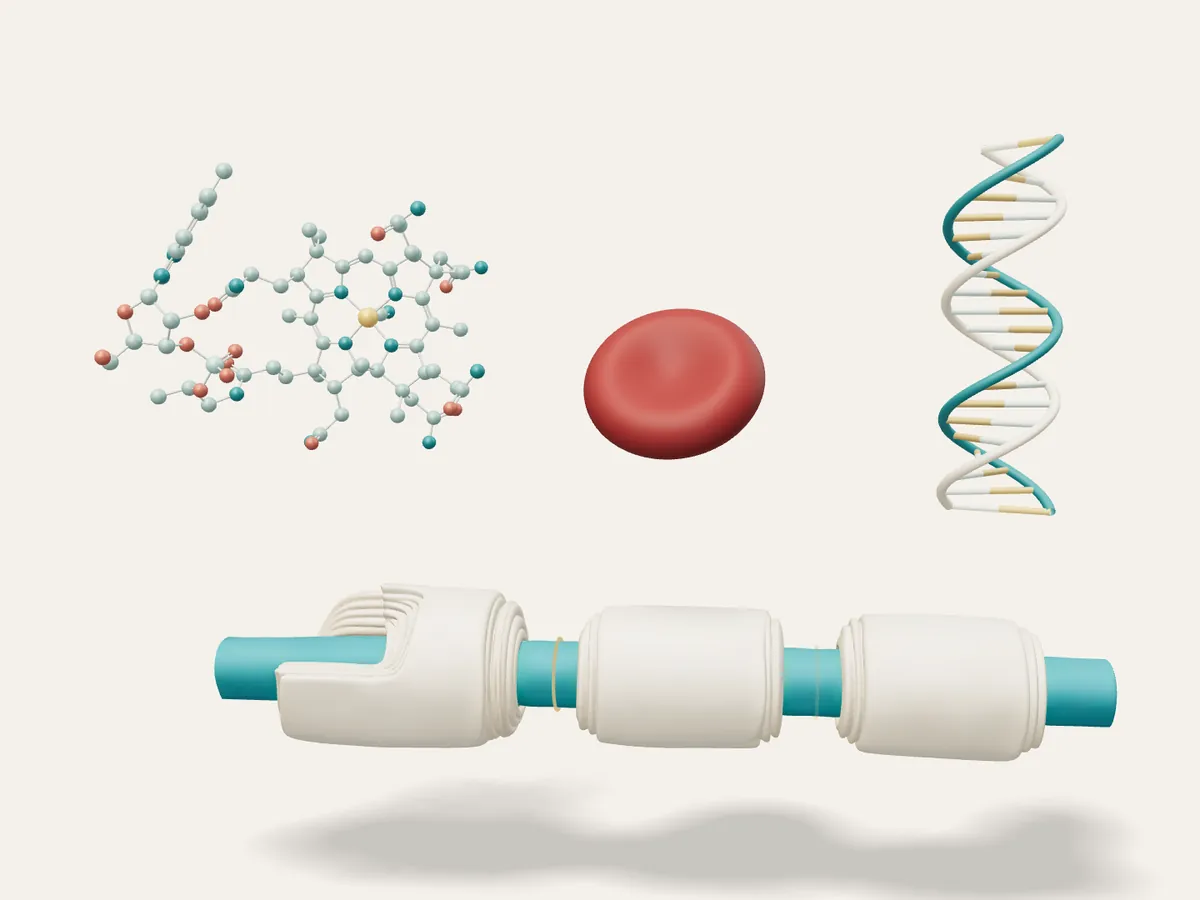
B12 supports blood cells, DNA and nerve function
Nutritional Health
Vitamin B12 is essential for making healthy red blood cells, keeping nerves insulated and copying DNA. Your body can't make it: it comes almost entirely from animal foods.
Measured in your health assessment, with a doctor to explain your result. Book yours
B12 supports blood cells, DNA and nerve function
Absorbing B12 needs a protein from the stomach called intrinsic factor, so a shortage can come from your diet or from your gut. The liver stores several years' worth, which is why deficiency develops slowly.
Low B12 can cause tiredness, anaemia with large red cells, pins and needles, memory problems and low mood. Causes include vegan diets, pernicious anaemia (an autoimmune condition), stomach surgery, coeliac disease and medicines such as metformin and long-term acid reducers.
High levels usually reflect supplements or injections. Unexpectedly high levels without supplements occasionally reflect liver or blood conditions and are reviewed.
Meat, fish, eggs and dairy provide B12, and people who eat a vegan diet need fortified foods or a supplement. A deficiency caused by poor absorption is treated with injections; a dietary one can be treated with tablets.
NoteGeneral educational illustration. Colours, sizes and movement are simplified. This is not a scan or a simulation of your body. General information, not personal medical advice: a doctor reads your own results with your history.
Measured in your health assessment and explained by the doctor who reviews your results.