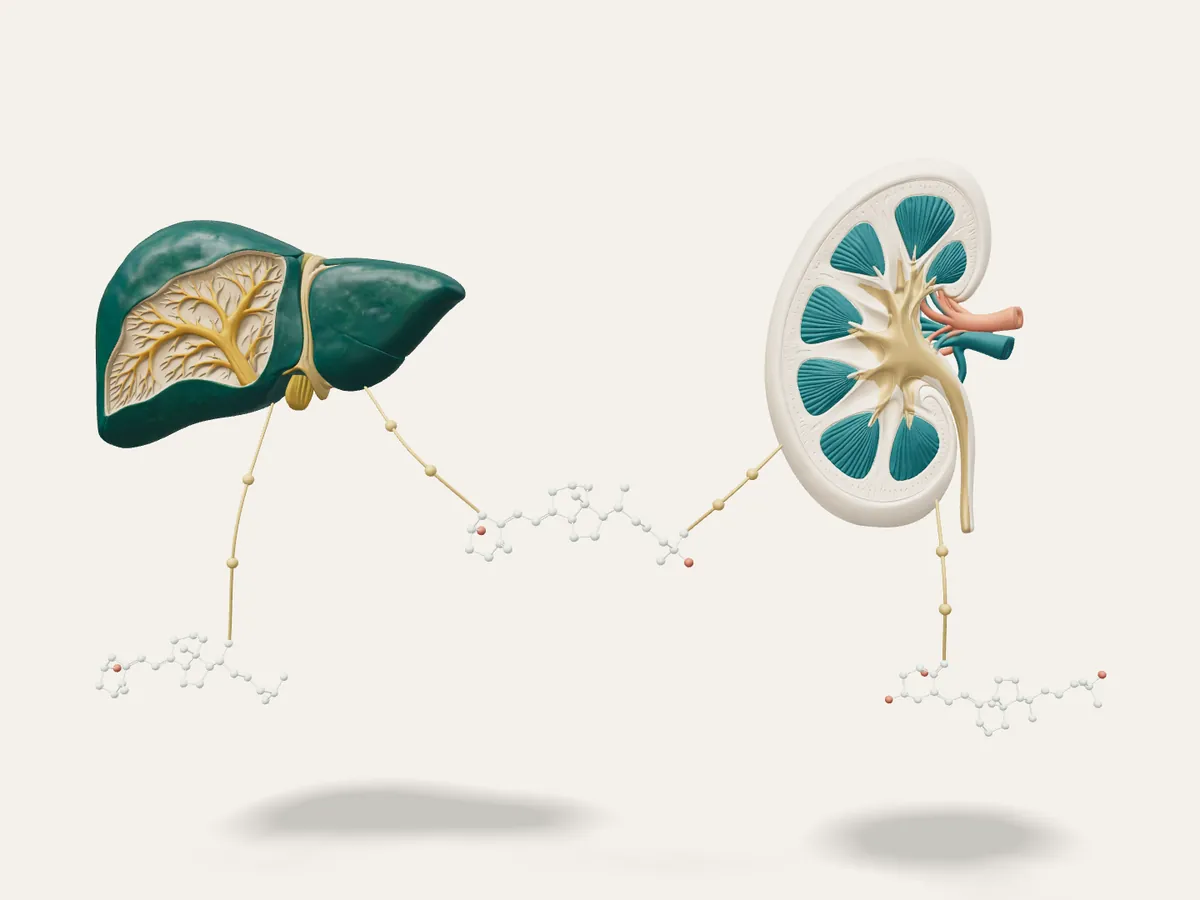
Vitamin D is processed in the liver and kidneys
Nutritional Health
Vitamin D is really a hormone your skin makes from sunlight. It helps you absorb calcium and phosphate for strong bones and supports your muscles and immune system.
Measured in your health assessment, with a doctor to explain your result. Book yours
Vitamin D is processed in the liver and kidneys
In the UK the sun is too low between October and March for skin to make it, so levels fall through the winter and around 1 in 6 adults are deficient. UK health advice is for everyone to consider a daily 10 microgram (400 IU) supplement in autumn and winter.
Below 25 nmol/L is deficient and can cause bone pain and muscle weakness, and rickets in children; 25 to 50 nmol/L is often called insufficient. Darker skin, covering up, spending most time indoors, older age and obesity all raise the risk.
High levels almost always come from taking high-dose supplements for a long time. Very high levels can raise calcium and cause nausea, thirst and kidney problems.
Sensible sun exposure in spring and summer, oily fish, eggs and fortified foods all help, and a supplement covers the winter gap. Doctors sometimes recommend a higher dose for a short time to correct a deficiency.
NoteGeneral educational illustration. Colours, sizes and movement are simplified. This is not a scan or a simulation of your body. General information, not personal medical advice: a doctor reads your own results with your history.
Measured in your health assessment and explained by the doctor who reviews your results.