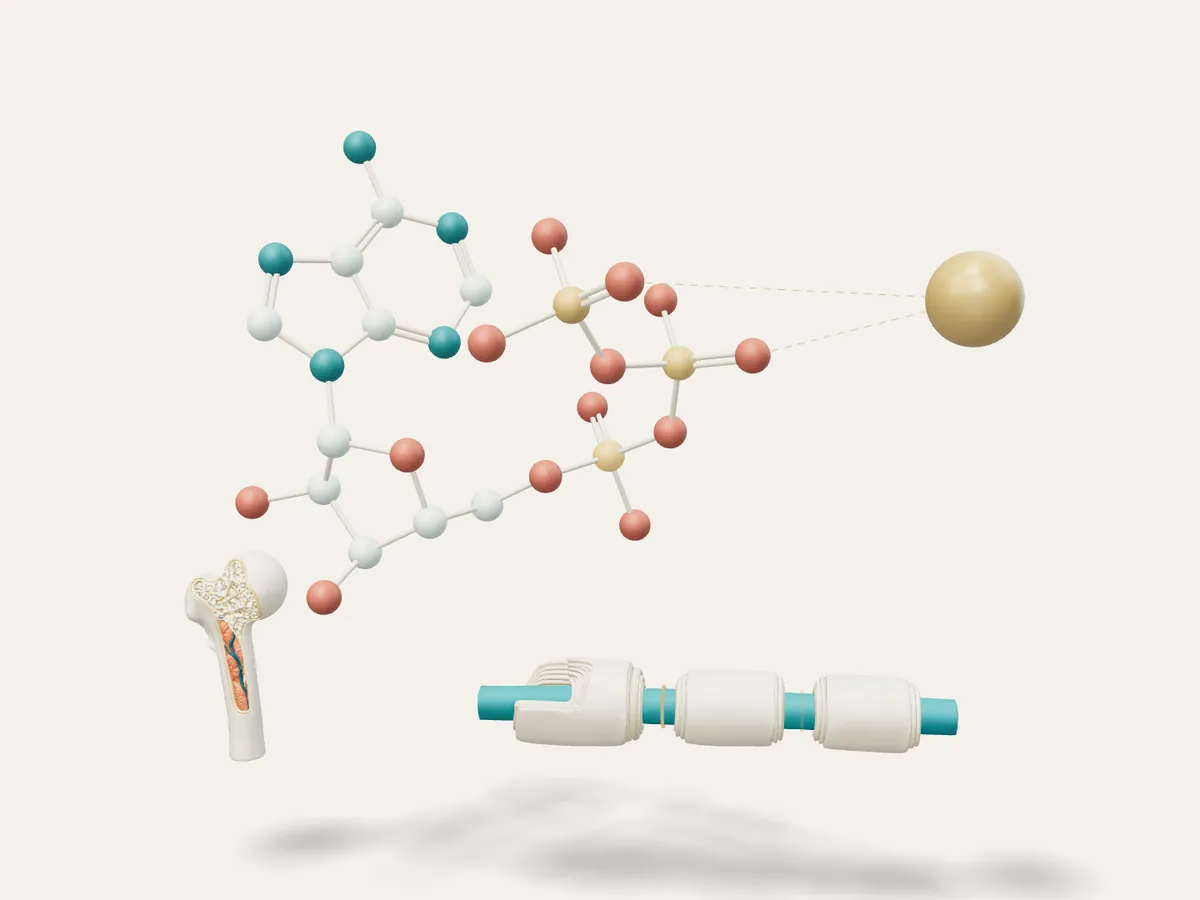
Magnesium supports ATP and nerve function
Kidney Health
Magnesium is involved in more than 300 enzyme reactions, from making energy and protein to keeping your heart rhythm steady and your muscles relaxed.
Measured in your health assessment, with a doctor to explain your result. Book yours
Magnesium supports ATP and nerve function
Most of it lives in bone and inside cells, so the blood level is only a rough guide to your total stores. A low magnesium also makes it hard to keep calcium and potassium normal.
Low magnesium is commonly caused by alcohol, diarrhoea, diuretics and long-term use of acid-reducing medicines such as omeprazole, and can cause cramps, tremor and palpitations.
A high magnesium is uncommon and is usually seen with kidney disease or excess intake from supplements, laxatives or antacids.
Leafy greens, nuts, seeds, beans and whole grains are good sources. Supplements are sometimes recommended for a low level, alongside a review of any medicines that might be the cause.
NoteGeneral educational illustration. Colours, sizes and movement are simplified. This is not a scan or a simulation of your body. General information, not personal medical advice: a doctor reads your own results with your history.
Measured in your health assessment and explained by the doctor who reviews your results.