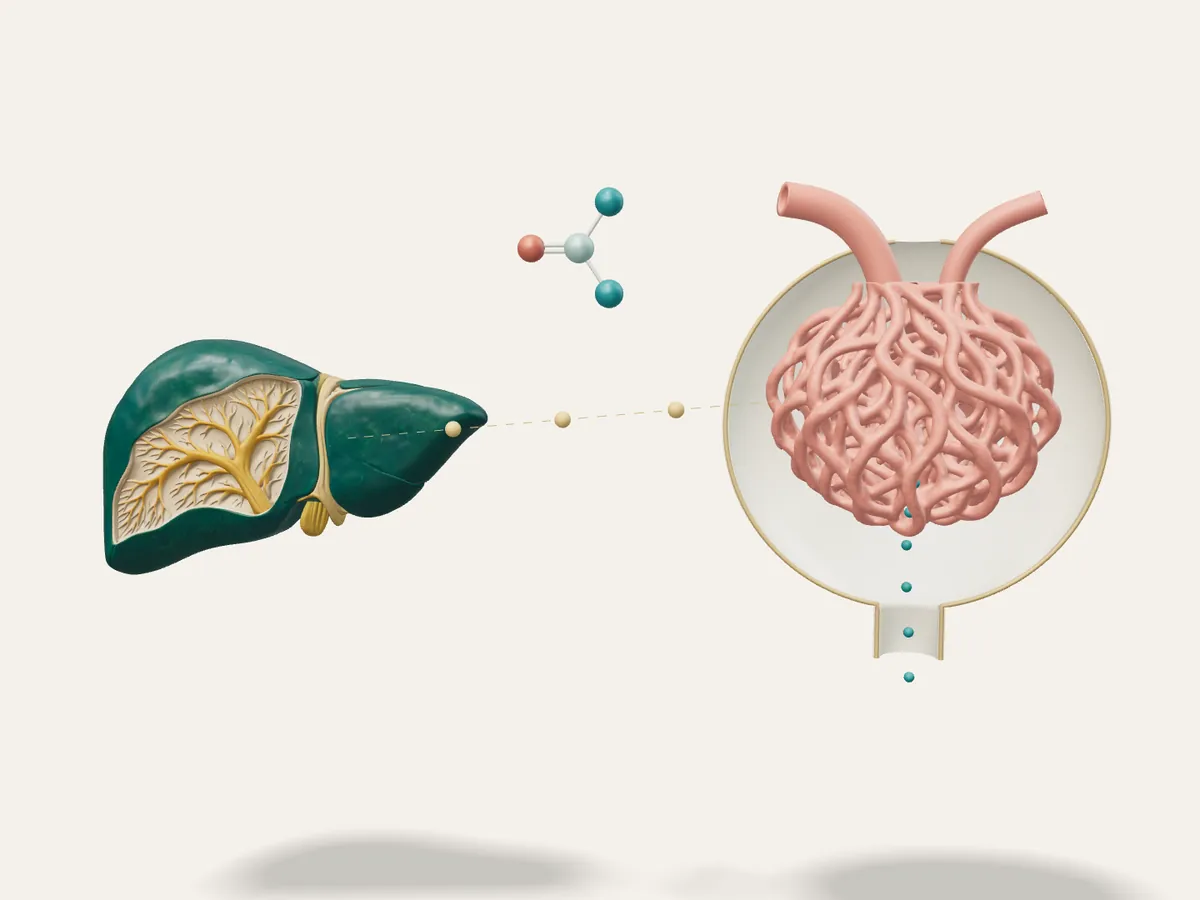
Urea production and clearance
Kidney Health
Urea is how your body gets rid of the nitrogen from protein. The liver makes it from the ammonia released when protein is broken down, and the kidneys excrete it.
Measured in your health assessment, with a doctor to explain your result. Book yours
Urea production and clearance
Its level reflects a balance between how much protein you eat and break down, how much urea the liver makes and how well the kidneys clear it. It is very sensitive to hydration, so it is always read with creatinine.
A low urea can come from a low-protein diet, drinking a lot of fluid, pregnancy or, rarely, severe liver disease.
Raised urea is commonly due to dehydration, a high-protein diet, bleeding in the upper gut or steroid treatment, as well as reduced kidney function.
Drinking enough and eating a balanced amount of protein keep urea in range. A persistent rise together with creatinine points to the kidneys, which are then assessed.
NoteGeneral educational illustration. Colours, sizes and movement are simplified. This is not a scan or a simulation of your body. General information, not personal medical advice: a doctor reads your own results with your history.
Measured in your health assessment and explained by the doctor who reviews your results.