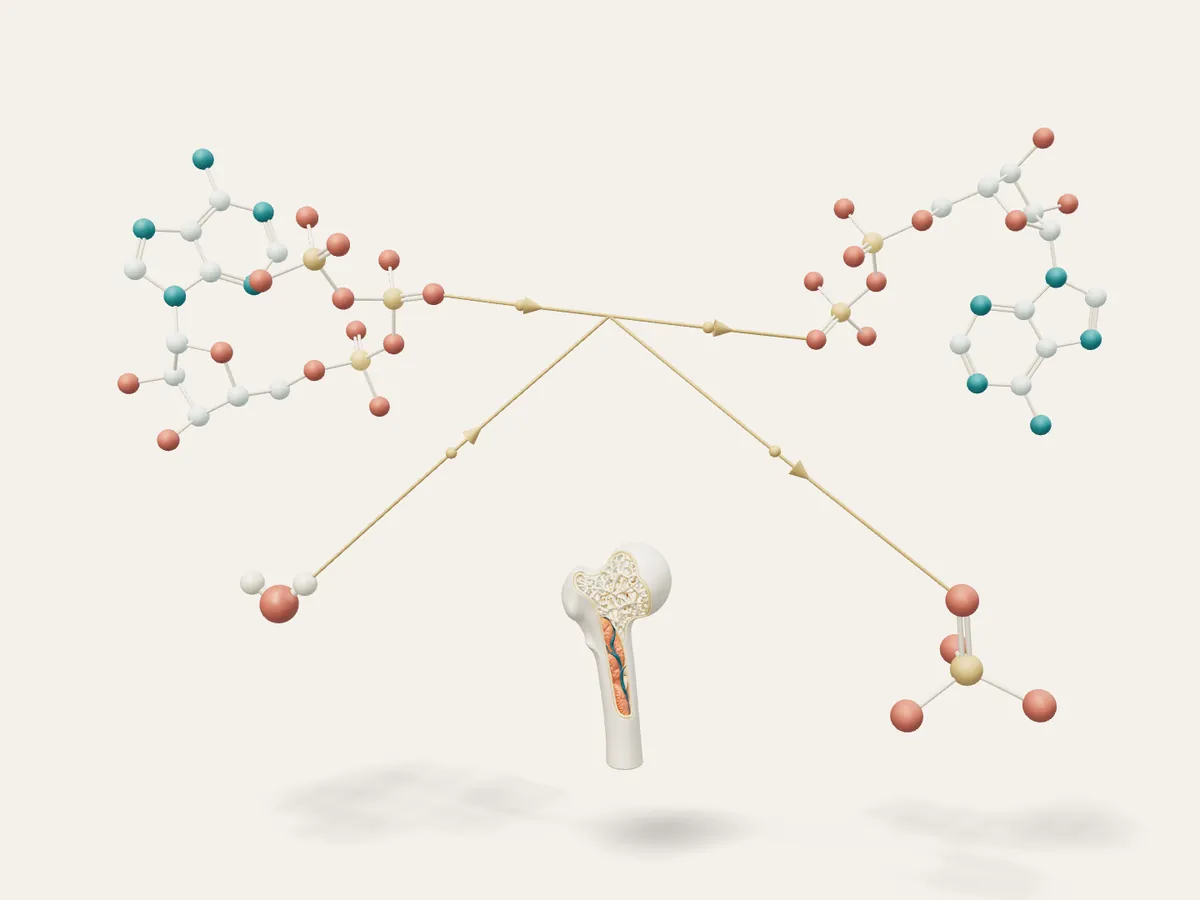
Phosphate contributes to energy handling and bone
Kidney Health
Phosphate partners with calcium to build bone, and every cell uses it to store and spend energy as ATP.
Measured in your health assessment, with a doctor to explain your result. Book yours
Phosphate contributes to energy handling and bone
The kidneys, parathyroid hormone and vitamin D regulate it, and it is read alongside calcium because the two tend to move in opposite directions.
Low phosphate can follow poor nutrition or heavy drinking, an overactive parathyroid, vitamin D deficiency or rapid refeeding after starvation, and can cause muscle weakness.
A raised phosphate is most often due to reduced kidney function, and less commonly to low parathyroid hormone or excess vitamin D. A delayed sample can falsely raise it.
Most people get plenty of phosphate from food. Abnormal levels are managed by treating the cause, and people with kidney disease may be advised to limit high-phosphate foods such as processed meats and cola.
NoteGeneral educational illustration. Colours, sizes and movement are simplified. This is not a scan or a simulation of your body. General information, not personal medical advice: a doctor reads your own results with your history.
Measured in your health assessment and explained by the doctor who reviews your results.