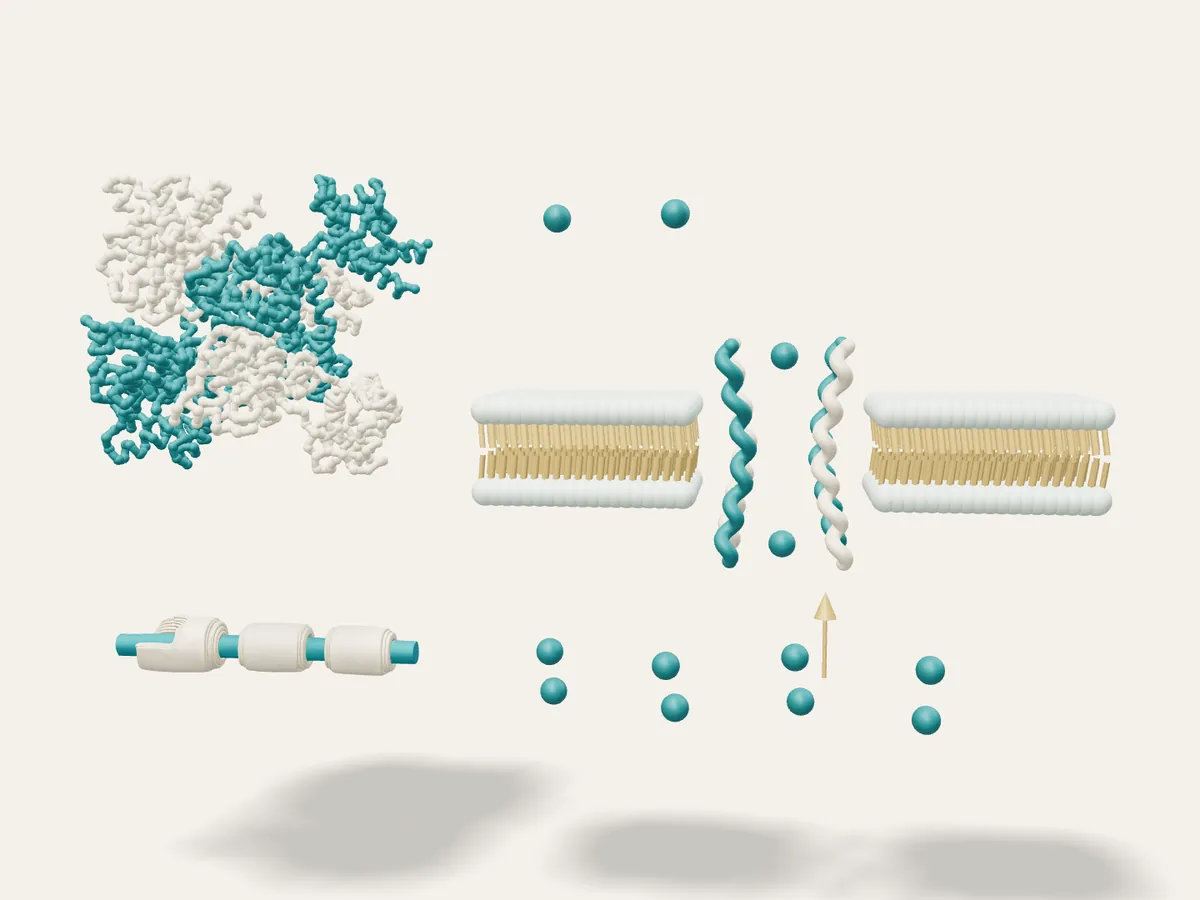
Potassium supports electrical signalling
Kidney Health
Potassium is the main salt inside your cells, and it is essential for a steady heartbeat, nerve signals and muscle contraction.
Measured in your health assessment, with a doctor to explain your result. Book yours
Potassium supports electrical signalling
Because nearly all of it sits inside cells, small changes in the blood level are significant, especially for the heart. The kidneys do most of the balancing.
Low potassium is commonly caused by diuretics, vomiting or diarrhoea, and can cause weakness, cramps and palpitations.
High potassium can come from reduced kidney function or medicines such as ACE inhibitors and spironolactone. Very often, though, it is a false reading caused by red cells bursting in a sample that was delayed or shaken in transit, so it is usually repeated.
Fruit, vegetables, beans and nuts are rich in potassium and help lower blood pressure in people with healthy kidneys. Abnormal results are rechecked and medicines reviewed, and people with kidney disease may need to limit high-potassium foods.
NoteGeneral educational illustration. Colours, sizes and movement are simplified. This is not a scan or a simulation of your body. General information, not personal medical advice: a doctor reads your own results with your history.
Measured in your health assessment and explained by the doctor who reviews your results.