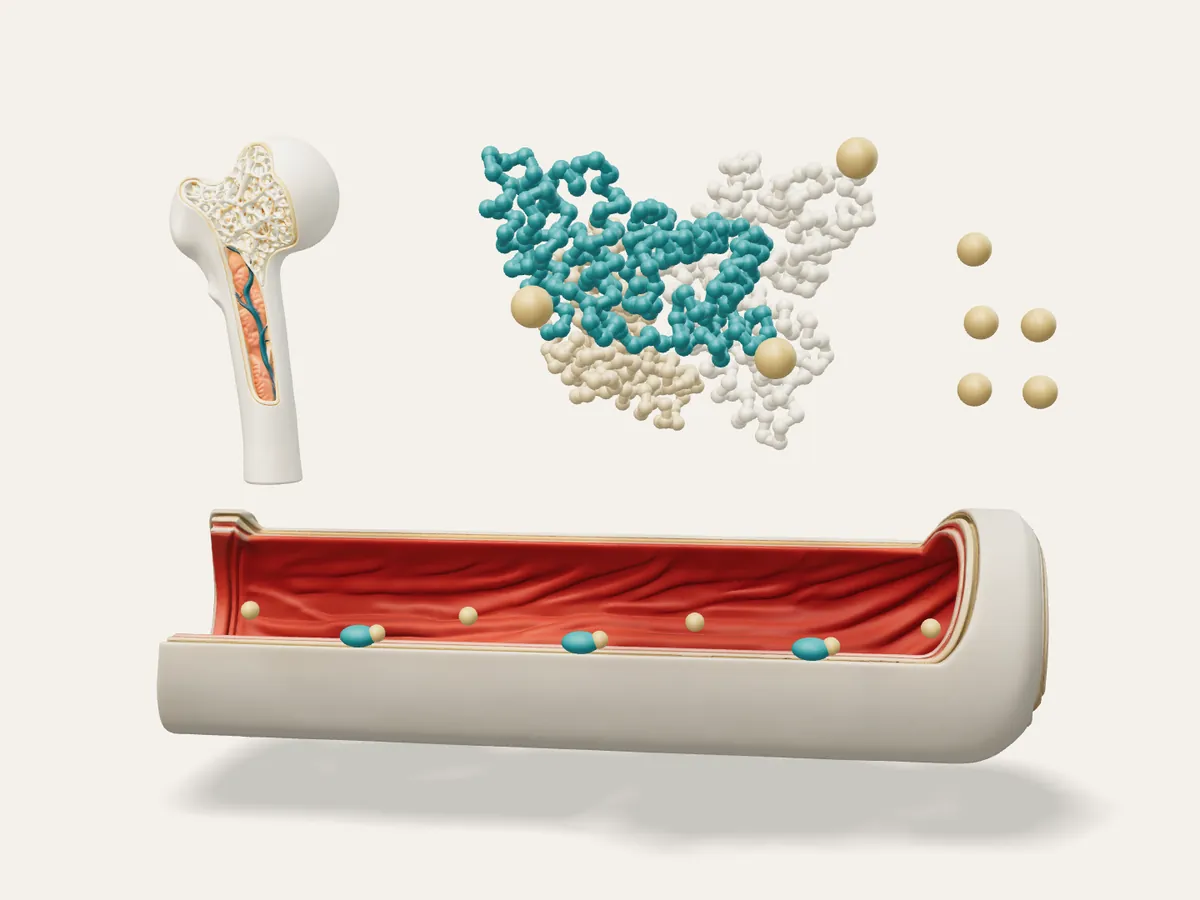
Calcium in bone and blood has different roles
Kidney Health
Calcium builds your bones and teeth, which hold 99% of it. The 1% in your blood matters just as much: it controls muscle contraction, nerve signals and heart rhythm.
Measured in your health assessment, with a doctor to explain your result. Book yours
Calcium in bone and blood has different roles
Parathyroid hormone and vitamin D keep blood calcium in a remarkably tight range, borrowing from bone or depositing into it as needed. Labs adjust the result for albumin, the protein that carries much of it.
Low calcium is most often due to vitamin D deficiency, low magnesium or kidney disease, and can cause tingling and cramps.
The two commonest causes of raised calcium are an overactive parathyroid gland and, less often, cancer; high-dose vitamin D or calcium supplements can also raise it. High levels can cause thirst, constipation, kidney stones and low mood.
Dairy foods or fortified alternatives, tinned fish with soft bones, leafy greens and enough vitamin D support your bones. An abnormal blood level, though, reflects regulation rather than diet, so the cause, usually the parathyroid glands or vitamin D, is investigated.
NoteGeneral educational illustration. Colours, sizes and movement are simplified. This is not a scan or a simulation of your body. General information, not personal medical advice: a doctor reads your own results with your history.
Measured in your health assessment and explained by the doctor who reviews your results.