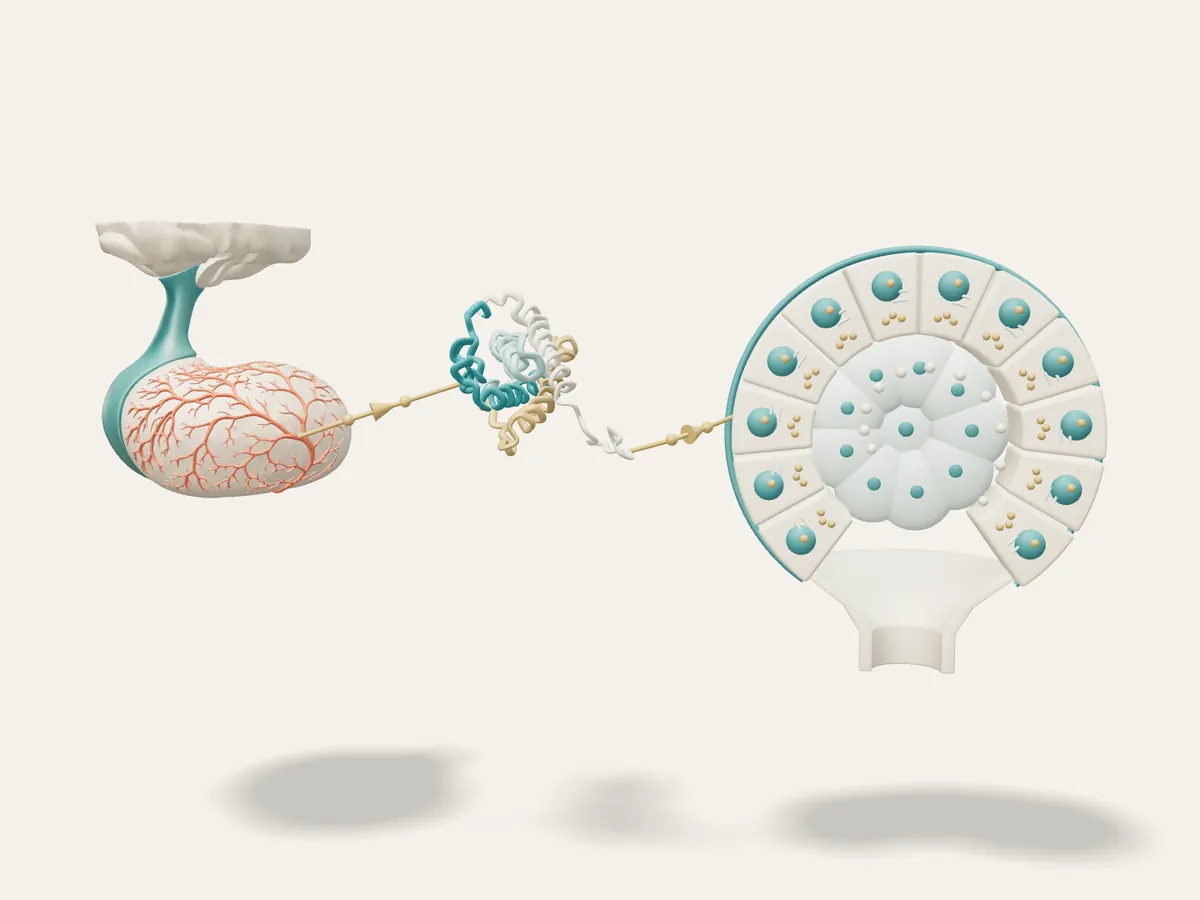
Prolactin and milk-producing tissue
Hormonal Health
Prolactin is the pituitary hormone that triggers breast milk after childbirth. Everyone has some at lower levels.
Measured in your health assessment, with a doctor to explain your result. Book yours
Prolactin and milk-producing tissue
High prolactin switches off the hormones that drive ovulation and testosterone, so it can cause irregular periods, low libido and difficulty conceiving.
A low prolactin is uncommon and rarely significant.
Raised prolactin is common with stress, including the stress of having blood taken, pregnancy, breastfeeding, an underactive thyroid and some medicines such as antipsychotics and anti-sickness drugs. A persistently high level can come from a benign pituitary growth called a prolactinoma.
A mildly raised result is usually repeated, ideally after resting for a while. Medicines that may be responsible are reviewed, and a prolactinoma usually responds very well to tablets.
NoteGeneral educational illustration. Colours, sizes and movement are simplified. This is not a scan or a simulation of your body. General information, not personal medical advice: a doctor reads your own results with your history.
Measured in your health assessment and explained by the doctor who reviews your results.