Urine acidity and alkalinity
Urinalysis
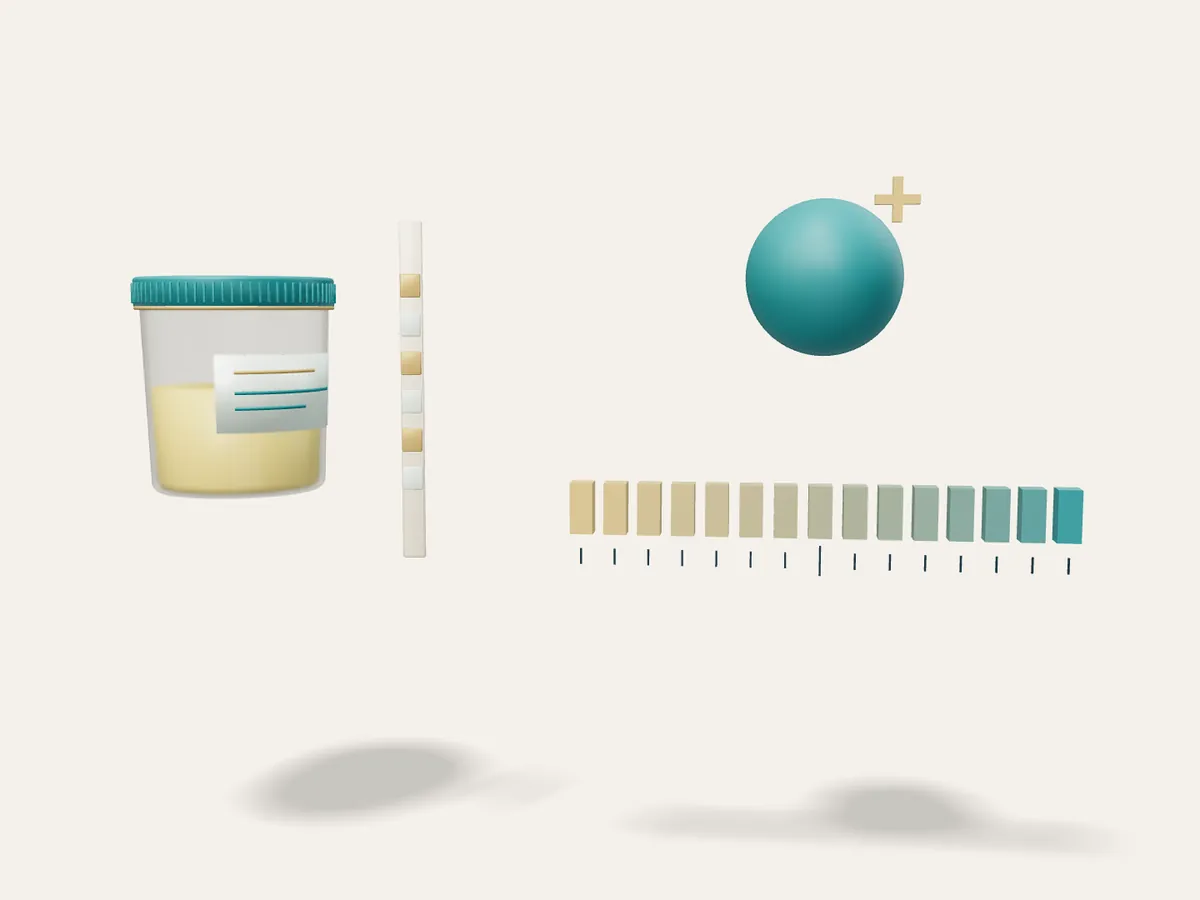
Urine pH measures how acidic or alkaline your urine is, on a scale where 7 is neutral. Most urine is slightly acidic, around 5.5 to 6.5.
Measured in your health assessment, with a doctor to explain your result. Book yours
Urine acidity and alkalinity
Your kidneys balance your body's acid levels by passing acid into urine, and what you eat shifts the result: meat-heavy meals make urine more acidic, plant-rich meals more alkaline.
Acidic urine is common with high-protein diets, fasting, dehydration and poorly controlled diabetes, and it favours uric acid kidney stones.
Alkaline urine is common after vegetable-rich meals. It can also occur with some urine infections, because certain bacteria make ammonia, and it favours some types of kidney stone.
Urine pH is a clue rather than a target, and it is read with the rest of the urine test. People who have had kidney stones may be given advice on diet and fluids to shift it.
NoteGeneral educational illustration. Colours, sizes and movement are simplified. This is not a scan or a simulation of your body. General information, not personal medical advice: a doctor reads your own results with your history.
Measured in your health assessment and explained by the doctor who reviews your results.