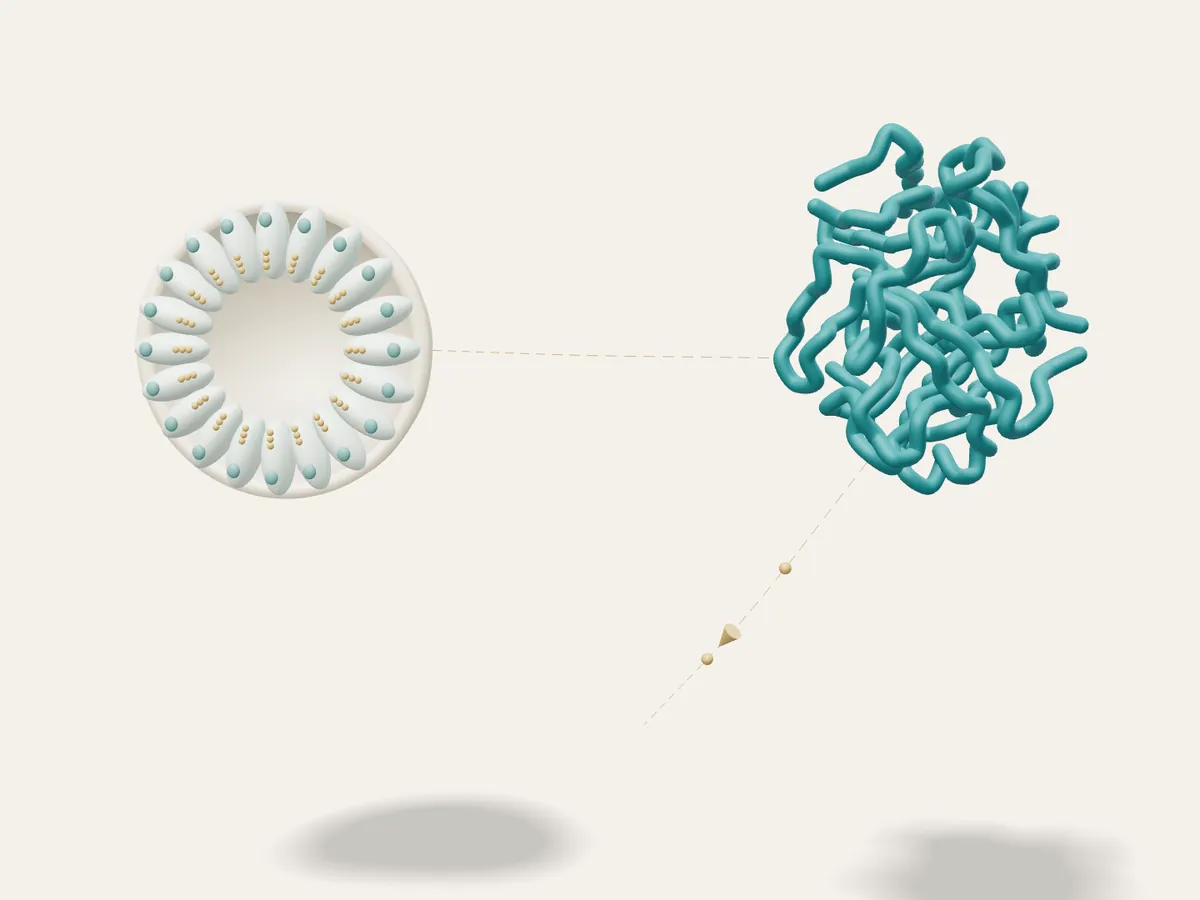
PSA helps break down proteins
Other tests
PSA (prostate-specific antigen) is a protein made by the prostate gland that helps keep semen liquid. A small amount leaks into the blood.
Measured in your health assessment, with a doctor to explain your result. Book yours
PSA helps break down proteins
PSA rises with prostate enlargement, inflammation and cancer. There is no routine national PSA screening in the UK, because the test can miss some cancers and find others that would never cause harm, so it is best done knowing both the benefits and the limits.
A low PSA for your age makes significant prostate cancer less likely. Medicines for an enlarged prostate, such as finasteride, roughly halve the PSA, which is taken into account.
Common causes of a raised PSA are an enlarged prostate, which is very common with age, prostate infection, recent ejaculation, vigorous cycling and a recent urinary catheter. A raised PSA for your age is followed up with a repeat test and, if needed, an MRI scan before any biopsy.
Avoid ejaculation, vigorous exercise and cycling for 48 hours before the test. Results are judged against age-specific ranges and against your own earlier results, and a GP or urologist can talk through what to do next.
NoteGeneral educational illustration. Colours, sizes and movement are simplified. This is not a scan or a simulation of your body. General information, not personal medical advice: a doctor reads your own results with your history.
Measured in your health assessment and explained by the doctor who reviews your results.